
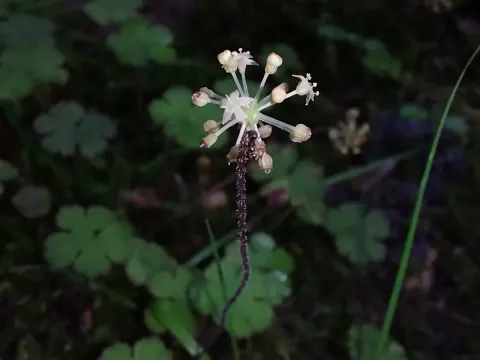
Hydrocotyle elongata
Hydrocotyle elongata
Hydrocotyle elongata, a member of the Araliaceae family, is a herbaceous perennial known for its creeping habit and distinctive shield-shaped leaves. It is native to moist, shady environments, thriving in habitats where constant soil moisture is available, such as stream banks or forest edges.
What the section contains
Hydrocotyle elongata
Botanically, the plant is characterized by its elongated, prostrate stems that root at the nodes. This morphological adaptation allows Hydrocotyle elongata to propagate efficiently across damp terrain, making it an excellent candidate for stabilizing soil in riparian zones or humid gardens.
To successfully cultivate this species, it is essential to mimic its natural habitat. The plant requires a well-drained but consistently moist substrate rich in organic matter. While it is a water-loving plant, it does not tolerate stagnant, anaerobic conditions, which can lead to root decay.
In terms of climate, Hydrocotyle elongata prefers temperate to warm environments with high atmospheric humidity. It is sensitive to excessive solar radiation and thrives best in dappled shade or partial light conditions. High temperatures combined with low humidity can be detrimental to its growth.
The agricultural and ornamental use of this plant is diverse. It is often utilized in water garden design to provide a natural look around ponds and as an understory cover in managed humid forest ecosystems. Ongoing research explores its medicinal potential, reflecting the general properties of the Hydrocotyle genus.
Root rot is the most significant threat to Hydrocotyle elongata, typically caused by poor drainage or overly compacted soil. Once the root system is compromised by fungal pathogens, the plant struggles to transport nutrients, leading to rapid decline and chlorosis of the foliage.
Pests such as spider mites and aphids are known to target the plant, especially in controlled environments like greenhouses where air circulation might be limited. These insects feed on the tender leaf tissues, causing stippling, curling, and overall reduction in plant vigor.
Effective management involves maintaining appropriate spacing to ensure adequate airflow between individual plants. This practice limits the humidity around the foliage and prevents the micro-climatic conditions that pathogens prefer, thereby reducing the need for intensive fungicide application.
Monitoring for signs of pest infestation is a critical part of its care. Implementing integrated pest management strategies, such as introducing predatory insects or using horticultural soaps, is preferred over synthetic chemicals, as the plant is relatively sensitive to harsh pesticides.
Proper water management is the cornerstone of preventing physiological disorders. Avoiding extreme fluctuations between water-logged and dry conditions helps the plant maintain a strong immune system, making it more resilient against the common pathogens found in wetland settings.