
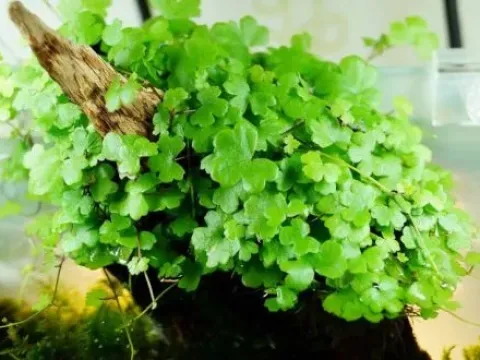
Japanese pennywort
Hydrocotyle japonica
Sowing of Japanese pennywort is best carried out in the spring, once the soil has warmed up and the risk of frost has completely passed.
What the section contains
Japanese pennywort
Seeds require a nutrient-rich, moist substrate to germinate effectively, maintaining consistent humidity levels throughout the initial growth phase.
Vegetative propagation, such as division of established clumps or stem cuttings, is the preferred method for commercial cultivation due to its reliability.
When transplanting into the field, ensure proper spacing to allow for healthy development and to facilitate better air circulation around the plants.
Because the plant grows aggressively, it is essential to plan the planting layout to accommodate its rapid horizontal expansion across the designated area.
Japanese pennywort (Hydrocotyle japonica) is a perennial herb of the Araliaceae family, characterized by its prostrate, creeping growth habit.
The plant thrives in wet, marshy, or aquatic environments and prefers partial shade where it can benefit from diffused light rather than intense direct sun.
An ideal temperature range for this species is 20 to 25 degrees Celsius, as it is sensitive to cold temperatures and lacks significant frost tolerance.
Soils should be rich in organic matter, slightly acidic to neutral, and consistently moist to support the plant's shallow and spreading root system.
Proper cultivation management requires maintaining consistent water levels, as the plant is highly susceptible to stress under drought conditions.
Fungal pathogens, particularly those causing root rot or foliar blight, are common threats when plants are grown in poorly ventilated or excessively damp conditions.
Gastropods, such as slugs and snails, are frequent pests that can quickly consume tender leaves, causing significant economic damage to the crop.
In hot and dry conditions, spider mites and aphids may become problematic, requiring careful monitoring to prevent infestations from spreading.
Integrated pest management strategies, focusing on habitat control and timely sanitation, are the best methods for maintaining a healthy plantation.
Avoiding over-fertilization with nitrogen is crucial, as it can encourage succulent growth that is more prone to pest and disease attacks.
Harvesting is performed during the peak growing season to ensure the highest concentration of active compounds and optimal plant quality.
The aerial parts are harvested by careful trimming, ensuring that the root system remains intact to allow the plant to regenerate for subsequent cuts.
Once harvested, the material is cleaned to remove debris and then transported to processing facilities for drying or immediate fresh utilization.
Drying must be conducted in controlled environments with temperatures maintained below 40 degrees Celsius to preserve the integrity of the plant's constituents.
Final storage requires cool, dark, and dry conditions to prevent degradation and to ensure the product remains viable for its intended commercial use.