
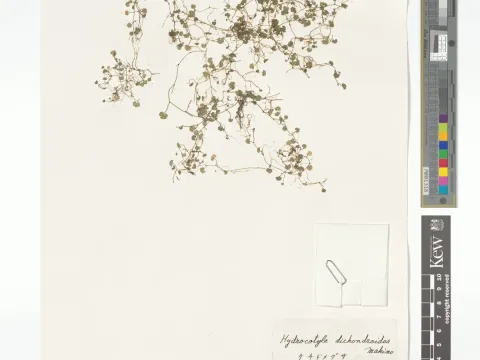
Hydrocotyle dichondroides
Hydrocotyle dichondroides
Hydrocotyle dichondroides is a perennial herbaceous plant belonging to the Araliaceae family. It is native to tropical and subtropical regions of Asia, where it thrives in moist, shaded environments such as riverbanks, wetlands, and tropical forest floors.
What the section contains
Hydrocotyle dichondroides
The plant is characterized by its creeping stem habit, where nodes along the stem readily root into the substrate. Its rounded, peltate leaves are arranged on long petioles, forming dense, carpet-like mats that effectively cover the soil surface.
For optimal growth, this crop requires consistently high soil moisture levels and high air humidity. In agricultural or horticultural settings, it is best suited for marshy gardens, paludariums, or high-humidity greenhouse environments where water access is constant.
Lighting requirements are moderate, with partial shade being the ideal condition. Intense direct sunlight should be avoided to prevent foliar scorching, while inadequate lighting will result in leggy, weak stems that lack the typical ground-covering density.
The temperature range for active growth is between 18°C and 26°C. The plant is highly sensitive to frost, which makes it unsuitable for outdoor cultivation in temperate regions without significant protective measures during the winter season.
The primary threats to Hydrocotyle dichondroides are fungal infections, such as root rot and leaf blight, typically exacerbated by stagnant water or poor air circulation within the plant canopy. Maintaining a balance between humidity and ventilation is critical.
Pests such as spider mites and mealybugs can infest the foliage, particularly in indoor environments where air humidity might drop. These pests weaken the plant by sucking sap, which often leads to chlorosis and the premature death of stems.
Cultural control measures, including regular thinning of the plants and immediate removal of any dead or yellowing leaves, significantly reduce the risk of disease spread. This practice helps maintain a healthy microclimate within the dense mat.
Chemical control should be approached with caution, especially if the plant is grown in aquaria or near aquatic life. Whenever possible, preference should be given to organic soap-based sprays or biological predators to manage pest populations.
Proper soil aeration and the use of well-draining yet moisture-retentive substrates are essential for preventing root-based pathogens. Ensuring that the roots are not suffocating is the best long-term strategy for crop resilience.