
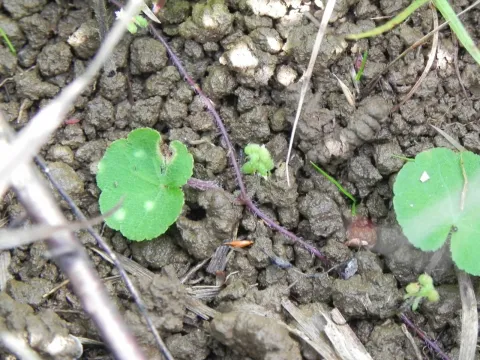
Hydrocotyle exigua
Hydrocotyle exigua
Hydrocotyle exigua, commonly known as a species of marsh pennywort, is a herbaceous perennial plant belonging to the Araliaceae family. It is primarily native to the tropical regions of Asia, where it thrives in humid habitats and moist soil conditions.
What the section contains
Hydrocotyle exigua
Botanically, the plant is characterized by its creeping stems that produce roots at each node, allowing it to form dense, low-growing mats. Its small, shield-shaped leaves are highly valued for their delicate aesthetic, making the plant popular in hydroponics and indoor landscaping.
The culture requires a consistently moist, nutrient-rich substrate to thrive. It is sensitive to drought, and growers must ensure that the growing medium remains damp at all times to prevent wilting and root desiccation, which can be fatal to the plant.
Regarding climate, Hydrocotyle exigua prefers stable temperatures between 20°C and 26°C. It thrives under bright, indirect light; direct sunlight should be avoided during peak hours, as it can scorch the delicate foliage and reduce the plant's overall vitality.
Optimal agro-techniques involve providing a well-draining yet moisture-retentive soil mix. Regular fertilization with a balanced liquid fertilizer, applied in diluted concentrations, helps maintain rapid growth and deep green coloration of the leaves throughout the growing season.
The economic value of this crop is primarily decorative. It is extensively utilized in aquascaping and vivarium design to create a natural green carpet on the foreground. Its ability to grow in both semi-aquatic and boggy conditions makes it highly versatile.
Harvesting for commercial propagation is achieved through the division of stems or rooted segments. Growers carefully prune the runners, ensuring each section has at least one node and a few leaves to guarantee successful rooting in new pots or aquatic substrates.
Post-harvest handling is critical due to the fragile nature of the stems. The plant material should be kept in high-humidity environments, away from drafts and excessive heat, to preserve its freshness before shipping or immediate replanting.
For long-term management, the plant requires periodic thinning. As the colony grows, the density can lead to a depletion of nutrients and light within the lower layers, making it necessary to refresh the planting medium every eighteen to twenty-four months.
Packaging for distribution typically involves wrapping the root systems in moist sphagnum moss or placing them in breathable plastic containers. This maintains the necessary moisture level while allowing the plant to survive transport without developing rot or fungal infections.