
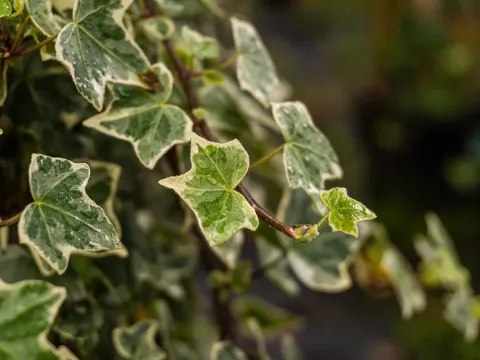
Ivy hybrids
Hedera hybrids
Ivy hybrids (Hedera hybrids) belong to the Araliaceae family. These are evergreen perennial vines resulting from cross-breeding different species, such as Hedera helix and Hedera colchica, to create varieties with unique foliage patterns and improved hardiness.
What the section contains
Ivy hybrids
Cultivation requires moderate, indirect light. While most hybrids are shade-tolerant, variegated varieties require brighter light to maintain their distinct coloration. Inadequate lighting often leads to the loss of leaf markings and slower overall growth rates.
The ideal growing medium is well-drained, fertile soil with a neutral to slightly acidic pH. Avoiding waterlogging is essential, as the roots are highly susceptible to rot. Using a high-quality potting mix with perlite or coarse sand helps improve aeration for healthy root development.
Temperature should remain between 15 and 22 degrees Celsius. Ivy hybrids are sensitive to sudden temperature fluctuations and cold drafts, so they should be placed away from air conditioning vents and heat sources to prevent leaf drop and physiological stress.
Proper propagation is achieved through stem cuttings. This method ensures that the genetic traits, including the specific leaf shape and growth habits of the hybrid, are preserved. Cuttings root easily in water or moist perlite under high humidity conditions.
Ivy hybrids serve various agricultural and ornamental purposes, including vertical greening of building facades, garden fences, and as ground cover in landscaping projects. Their dense foliage provides excellent coverage and natural insulation for exterior walls.
In interior horticulture, these hybrids are popular for hanging baskets and vertical green walls. They are valued for their ability to thrive in indoor environments while effectively filtering air pollutants like formaldehyde and benzene from the atmosphere.
Biomass production is characterized by rapid shoot extension during the active growing season. Regular pruning is necessary to maintain the desired shape and promote denser branching, which enhances the overall decorative quality of the plant material.
Commercial nurseries focus on mass-producing healthy ivy hybrids for the landscape design market. Success in this sector depends on the efficiency of propagation cycles and the ability to maintain uniform growth standards across thousands of plants.
The ecological impact of using ivy hybrids includes noise reduction in urban settings and temperature moderation. By shading surfaces, the vines help reduce the heat island effect, making them a strategic choice for sustainable urban planning and greenery development.
Major pests affecting ivy hybrids include spider mites, scale insects, and aphids. Spider mites are particularly problematic in dry indoor environments, causing stippling, yellowing, and eventual leaf drop if left untreated by appropriate miticides.
Integrated pest management is crucial for maintaining the health of the crop. This involves routine inspection of the undersides of leaves, proper humidity control, and the judicious use of insecticidal soaps or systemic treatments to manage outbreaks.
Botrytis blight (gray mold) is a common fungal disease associated with high humidity and poor air circulation. It manifests as soft, brown spots on leaves and stems, often covered with fuzzy grayish mycelium that spreads rapidly in stagnant air.
Root rot, often caused by Phytophthora or Pythium fungi, is the primary threat to root systems. It is almost always a result of overwatering or inadequate drainage. Remediation requires immediate repotting into fresh soil and a strict adjustment of irrigation practices.
Bacterial leaf spot is another concern, often introduced through contaminated water or tools. Symptoms include dark, water-soaked spots with yellow halos. Management relies on removing infected foliage and sterilizing equipment to prevent secondary infections within the greenhouse.