
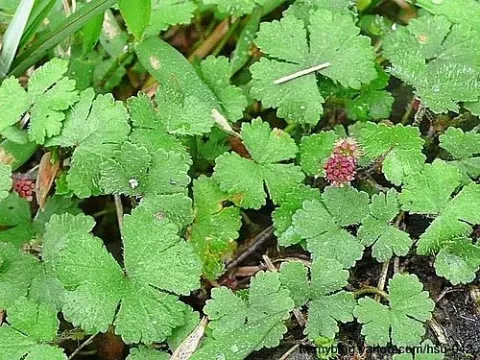
Hydrocotyle benguetensis
Hydrocotyle benguetensis
Planting of Hydrocotyle benguetensis is primarily carried out vegetatively by dividing rhizomes or using cuttings. The optimal time for propagation is the spring-summer period, when water and air temperatures reach stable high levels conducive to rapid rooting.
What the section contains
Hydrocotyle benguetensis
Seed propagation is difficult in agricultural conditions due to specific germination requirements. The most common method involves separating offshoots from the mother plant, which quickly develop their own root systems under high humidity conditions.
The plant demonstrates aggressive growth in open areas, so when planting in water bodies or moistened substrates, it is crucial to consider spacing. A recommended planting density is 20x20 cm to allow the plant to form a continuous vegetative cover quickly.
When cultivating in a controlled environment, a constant moisture level must be maintained. Unlike many field crops, this plant does not tolerate even temporary drying of the root zone, so planting dates must align with the active irrigation season.
For successful establishment of transplants, a substrate rich in organic matter with a neutral or slightly acidic pH is required. Access to light is essential, although it is advisable to shade young plants for the first few weeks after planting to prevent leaf scorch.
Hydrocotyle benguetensis belongs to the Araliaceae family and is a typical hydrophyte, preferring waterlogged areas or shallows. Its natural range encompasses tropical and subtropical regions, where it thrives in consistently high temperatures.
The crop is highly demanding regarding air and soil humidity levels. For full development, the plant needs high light intensity, although it can adapt to partial shade while maintaining its ornamental properties and growth rates.
The optimal temperature range for the development of Hydrocotyle is between +20 and +28 degrees Celsius. Temperatures below +10 degrees cause metabolic processes to slow down, while freezing temperatures lead to the death of the above-ground part.
Soil requirements include fertile silt, peat substrates, or light loams with high nitrogen content. The plant responds well to the application of complex mineral fertilizers, especially during the phase of active leaf plate expansion.
Water quality is a critical factor when growing this culture in aquaculture. Hydrochemical parameters must be stable, without excessive chlorine or heavy metals, which negatively affect the development of the delicate root system.
The main pests of Hydrocotyle are sap-sucking insects, such as aphids and spider mites, which develop actively when humidity levels are unbalanced. In greenhouse conditions, whitefly infestations may occur, requiring immediate treatment with biological agents.
Fungal diseases, including various types of powdery mildew and late blight, emerge when air circulation is poor in dense plantings. Prevention consists of regular thinning of plants and ensuring proper ventilation in the growing area.
Root rot is the most dangerous disease caused by pathogens of the Pythium genus. These develop in acidified soil or due to excessive accumulation of undecomposed organic matter in the substrate, which blocks oxygen access to the roots.
For large-scale pest control, systemic insecticides are recommended; however, when using the plant as a forage crop, preference should be given to biological control methods and the use of beneficial insects.
Mollusks and slugs can cause mechanical damage to leaf plates, which not only lowers the commercial quality of the plant but also creates pathways for secondary bacterial infections. Control is based on manual collection or the use of physical barriers.