
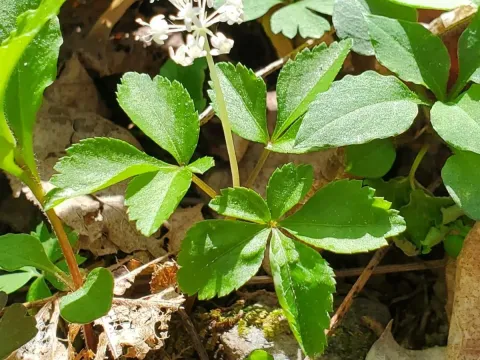
Ginseng
Panax
The planting of ginseng seeds is typically performed in late autumn, allowing the seeds to undergo the necessary cold stratification in the soil over winter.
What the section contains
 Ginseng
Panax ginseng C.A. Mey.
Ginseng
Panax ginseng C.A. Mey.
 Himalayan ginseng
Panax pseudoginseng Wall
Himalayan ginseng
Panax pseudoginseng Wall
 Panax notoginseng
 (Burkill) F. H. Chen ex C. Y. Wu & K. M. Feng
Panax notoginseng
Panax notoginseng (Burkill) F. H. Chen ex C. Y. Wu & K. M. Feng
 Vietnamese ginseng
Panax vietnamense Ha & Grushv
Vietnamese ginseng
Panax vietnamense Ha & Grushv
 Vietnamese ginseng fuscidiscus
Panax vietnamensis var. fuscidiscus K.Komatsu, S.Zhu & S.Q.Cai.
Vietnamese ginseng fuscidiscus
Panax vietnamensis var. fuscidiscus K.Komatsu, S.Zhu & S.Q.Cai.
Ginseng
Ginseng seeds possess a natural dormancy period, requiring a specific sequence of temperature changes that can last up to 18-22 months before germination.
In a controlled farming environment, agronomists often use stratified seeds kept in moist sand to ensure a higher germination rate during the spring season.
Seeds are sown at a depth of approximately 3-5 centimeters in well-prepared, loose soil beds, spaced to allow for optimal airflow and development.
Careful attention to seed quality is paramount, as the slow growth cycle makes replanting due to poor germination a significant loss of time and resources.
Ginseng belongs to the Araliaceae family and is an understory plant, meaning it strictly requires shade-cloth systems to mimic its natural forest habitat.
The ideal soil for ginseng must be highly organic, well-draining, and slightly acidic, with a pH range of 5.5 to 6.5 to prevent nutrient lockouts.
Temperature control is essential; ginseng thrives in moderate temperatures and can suffer severe physiological damage if exposed to direct, intense sunlight.
Soil moisture management is a delicate balance; waterlogged soil promotes root rot, while dry soil significantly stunts the growth of the slow-maturing root.
Effective plantation design includes adequate spacing and drainage structures to prevent the accumulation of stagnant water and ensure consistent development.
The production cycle for ginseng is notoriously long, with roots typically reaching harvestable size only after 5 to 6 years of intensive cultivation.
Yield is measured not only by weight but by the concentration of ginsenosides, the bioactive compounds that determine the market value of the crop.
Successful farms aim for a stable harvest of several tons per hectare, though this depends heavily on the maintenance of soil health and pest management.
Because the roots grow very slowly, any interruption in the growth phase, such as drought or disease, can significantly reduce the final harvest weight.
Economic profitability is high, but the long-term investment requires patience and meticulous care, making it a specialized niche in the agricultural sector.
Root rot and various fungal diseases are the primary threats to ginseng, often triggered by poor drainage or excessive humidity within the growing area.
Pests like wireworms and white grubs can cause devastating damage by feeding on the root system, often going unnoticed until the damage is irreversible.
Preventative strategies include strict field sanitation, crop rotation, and the use of fungicide treatments only when absolutely necessary and recommended.
Managing weed growth is critical not only for resource competition but also because weeds can harbor pathogens that easily spread to the sensitive ginseng crop.
Regular monitoring of soil conditions and plant health allows for early intervention, which is essential to protect the long-term investment of the plantation.
Harvesting ginseng must be done entirely by hand to ensure that the roots remain undamaged, as even minor cuts can drastically lower the product's grade.
The harvest occurs in the autumn, after the foliage has died back, which ensures the root contains the highest concentration of medicinal compounds.
Once extracted, the roots are carefully washed to remove soil and sorted based on their weight, shape, and overall appearance for the market.
Drying is a critical post-harvest step; it must be done slowly at controlled low temperatures to preserve the integrity of the active pharmacological ingredients.
The final cured product is then categorized, with older, larger roots often fetching a premium price in international herbal and pharmaceutical markets.