
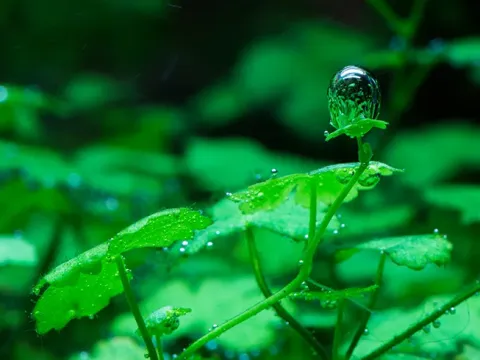
Hydrocotyle
Hydrocotyle hybrids
Propagation of Hydrocotyle for commercial and ornamental purposes is most often carried out vegetatively, as the seed method requires specific environmental conditions.
What the section contains
Hydrocotyle
The optimal time for dividing rhizomes and planting cuttings is during the spring, when the plant emerges from its dormancy phase and begins active growth.
When planting in soil or aquarium substrates, it is important to ensure tight contact between the stem nodes and the nutrient medium to stimulate root formation.
The temperature regime during planting should be maintained in the range of 20 to 25 degrees Celsius, which promotes rapid rooting of the crop.
In greenhouse conditions, planting in containers with an inert substrate enriched with complex fertilizers is practiced to accelerate vegetation.
Hydrocotyle belongs to the Araliaceae family and is a ground-covering perennial plant adapted to high humidity conditions.
The crop prefers well-lit places but can tolerate short-term shading without losing its decorative qualities.
A key development factor is water availability: the soil must be kept constantly moist, and in the case of aquarium use, it must be rich in nutrients.
The plant shows high responsiveness to the application of micronutrients, especially iron, the deficiency of which can cause leaf color intensity to fade.
The optimal acidity levels for the soil solution or water are in the weakly acidic to neutral range, with a pH between 6.0 and 7.5.
The main pests of the crop are spider mites and aphids, which attack the leaves when air humidity levels in the environment decrease.
In an aquatic environment, the plant can be affected by algae, which inhibit Hydrocotyle growth by blocking access to light and nutrients.
Fungal diseases, such as root rot, occur when water stagnates and aeration is absent, leading to the destruction of the root system.
Disease prevention includes regular sanitary pruning of dead leaves and maintaining an optimal balance of nutrients in the growing medium.
When pests are detected, the use of biological agents is recommended, as many Hydrocotyle species are sensitive to aggressive chemicals.
Harvesting or collecting vegetative mass is carried out as the patch spreads, once the plant has fully covered the designated area.
To maintain the viability of the mother plant, it is recommended to trim with a sharp tool, ensuring a clean cut without crushing the tissues.
The cut shoots are suitable for further propagation or for use as raw material for floristry and decorative purposes.
The harvesting process does not require special equipment and is performed manually, allowing the selection of the healthiest and most aesthetically pleasing fragments.
After harvesting, the material should be stored in a humid environment to avoid tissue dehydration until the moment of planting or sale.