
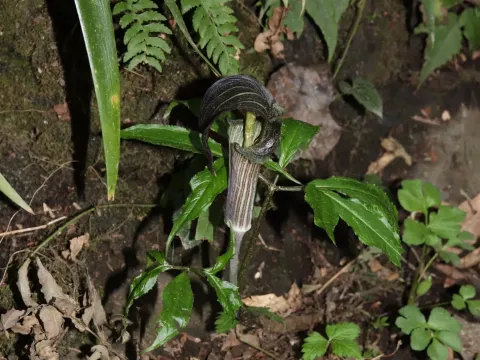
Arisaema limbatum
Arisaema limbatum
Arisaema limbatum is an exotic tuberous perennial plant belonging to the Araceae family. Native to the mountain regions of Southeast Asia, this species thrives in understory forest environments characterized by rich, humus-dense soils and high atmospheric humidity.
What the section contains
Arisaema limbatum
Successful cultivation of Arisaema limbatum requires a sheltered location with deep shade or dappled sunlight. Direct sun exposure is detrimental, often leading to scorched foliage and the rapid depletion of water reserves within the tuberous rootstock.
The soil requirements focus on high organic content and excellent drainage. A loose, slightly acidic growing medium composed of decomposed leaf litter and coarse sand is ideal to prevent the water stagnation that leads to rot.
Climatic adaptability is limited, as the plant is adapted to moderate, temperate, or tropical mountain conditions. During the dormant winter season, it is crucial to protect the tubers from freezing temperatures, especially in colder cultivation zones.
Moisture management is the cornerstone of its agronomy. While the soil must remain consistently damp throughout the growing season, it is imperative to allow for proper airflow to the soil surface to support healthy root development and gas exchange.
The most significant threats to Arisaema limbatum are fungal pathogens, specifically those causing basal and tuber rot. These diseases typically flourish in environments with poor drainage and excessive, stagnant soil moisture.
In terms of pest management, slugs and snails are the primary external threats. These pests target the succulent, tender growth as it emerges from the soil in spring, which can quickly devastate the foliage of a young plant.
Aphids can also pose a nuisance during periods of active growth. They tend to congregate on the underside of leaves and on the developing inflorescence, extracting plant sap and potentially transmitting viral agents.
Cultural prevention includes maintaining a clean growing area and ensuring that mulching materials do not touch the base of the stem directly, which helps in preventing the localized build-up of excess moisture and humidity.
Regular monitoring of the tuber condition during its dormancy period is also recommended to ensure no signs of rot have developed, allowing for timely intervention and treatment if necessary.