
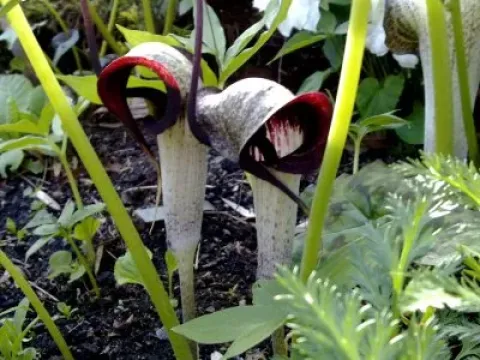
Arisaema hybrids
Arisaema hybrids
Arisaema hybrids are ornamental perennials belonging to the Araceae family, derived from the cross-breeding of various Asian species. The plant grows from a distinct tuber that acts as a storage organ.
What the section contains
Arisaema hybrids
The optimal time for planting tubers in the ground is spring, once the soil temperature consistently reaches 10-12 degrees Celsius to ensure rapid root establishment.
Propagation through seeds is generally performed in the fall, allowing for natural stratification throughout the winter months in outdoor trays or protected garden beds.
Planting depth is determined by the size of the tuber, with larger specimens buried approximately 10-15 centimeters deep for stability and protection.
Space the plants 30-40 centimeters apart to prevent overcrowding, which can lead to reduced airflow and increase the risk of foliage diseases.
These plants thrive in partial shade conditions, mimicking the forest understory environments from which their ancestors originated.
A well-draining, humus-rich soil with a slightly acidic to neutral pH level is ideal for successful tuber development and healthy growth.
Consistent soil moisture is required during the active growth phase, but the plant must never sit in standing water, as this leads to rapid rot.
Using mulch around the base of the plant helps retain moisture, suppresses weed growth, and adds necessary nutrients as the mulch decomposes.
During the dormant period, the soil should be kept relatively dry to prevent the tubers from rotting while the plant is not actively taking up water.
Fungal pathogens such as root rot and fusarium are the primary threats, often triggered by poor drainage or excessive soil moisture levels.
Slugs and snails are major pests that feed on the emerging shoots and leaves, which can disfigure the plant and reduce its photosynthetic capacity.
Aphids may occasionally infest the flowering spadix during dry periods, weakening the plant and potentially transmitting viral pathogens.
Management of these threats involves cultural practices such as removing debris and using preventive fungicides during the planting stage.
- Regular site inspections
- Use of specialized slug repellents
- Monitoring soil drainage efficiency