
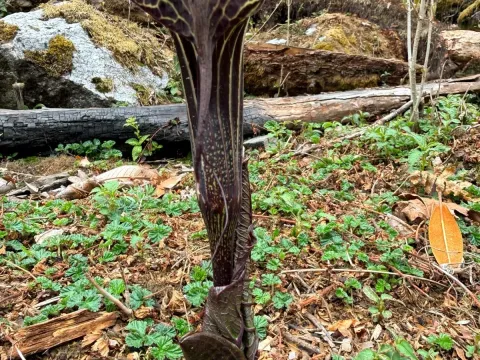
Arisaema griffithii
Arisaema griffithii
Arisaema griffithii is a unique tuberous perennial belonging to the Araceae family. This species originates from the high-altitude regions of the Eastern Himalayas, including Bhutan and Nepal, where it thrives in moist, shaded forest habitats.
What the section contains
Arisaema griffithii
Botanically, it is recognized by its distinct trifoliate leaves and a prominent, hooded spathe. The spathe typically exhibits deep purple and brown stripes, serving as an evolutionary mechanism to attract specific pollinators in its native environment.
For successful cultivation, plants require deep shade or partial shade conditions. They are sensitive to intense sunlight, which can scorch the foliage and negatively impact the overall vigor of the tuber during the growing season.
The soil must be rich in organic matter, such as leaf mold or well-rotted compost, to replicate the forest floor. A critical requirement is excellent drainage, as the tubers are highly susceptible to rot in stagnant, waterlogged soils.
In terms of climate, Arisaema griffithii thrives in cool, temperate environments. While it is hardy in many regions, the tubers should be protected from extreme freezing or excessive winter moisture to ensure successful emergence in the spring.
The primary horticultural threat to Arisaema griffithii is tuber rot, commonly caused by soil-borne fungi and excessive water retention in the root zone. Ensuring the planting site has a porous, well-draining soil structure is the best preventative measure.
Slugs and snails are significant pests, especially during the early spring when the plant produces tender new growth. Gardeners should employ biological controls or physical barriers to protect the emerging shoots from being devoured.
Viral pathogens may occasionally affect the plants, causing mosaic patterns or leaf distortion. If symptoms appear, immediate removal of the affected individual is necessary to protect the remainder of the collection.
Root-knot nematodes can also be a challenge in some soils. Utilizing sterile potting media and maintaining high levels of soil health can mitigate the prevalence of these microscopic pests in the garden environment.
Overall plant hygiene, including the removal of dead or decaying foliage at the end of the season, helps reduce the pressure from various opportunistic pathogens and fungal infections that thrive in damp, closed canopy conditions.