
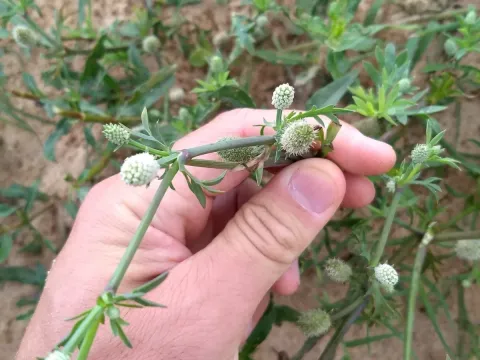
Eryngium divaricatum
Eryngium divaricatum
Eryngium divaricatum, a member of the Apiaceae family, is a perennial herb that requires specific sowing techniques to ensure successful germination. Seeds possess deep dormancy and typically benefit from cold stratification.
What the section contains
Eryngium divaricatum
For commercial cultivation, fall sowing is the most effective method, allowing natural winter temperatures to break seed dormancy. This produces uniform germination when spring temperatures rise.
If sowing in the spring, seeds should be pre-treated at 0-5°C for several weeks. The seeds must be placed at a shallow depth of approximately 0.5 cm, as they are light-sensitive and require a thin layer of soil to stay stable.
Row spacing should be kept between 45 and 60 cm to allow for proper airflow and root development. The spacing between plants within the row should be 30-40 cm to prevent overcrowding of the mature basal rosettes.
Growth during the first year is primarily vegetative, focusing on root establishment. It is important to maintain consistent weed control during this period to ensure the plants are not outcompeted by aggressive weeds.
The plant thrives in full sunlight. Choosing a site with at least 6-8 hours of direct solar radiation daily is essential for the healthy development of the plant structure and flowering stalks.
Well-drained, sandy-loam soils are ideal for Eryngium divaricatum. It is highly intolerant of waterlogged conditions, which can lead to rapid root decay and plant mortality.
This species exhibits significant drought tolerance once established. Its taproot system is designed to access deep water reservoirs, making it a low-input crop suitable for regions with limited rainfall.
Soil fertility requirements are relatively low; the species can adapt to poor soils. Excessive fertilization, particularly with nitrogen, should be avoided as it encourages soft growth prone to lodging and reduces hardiness.
Optimal temperature range for active growth is moderate to warm. The plant is remarkably hardy and can withstand freezing temperatures during winter dormancy, provided the soil is not saturated.
Root rot caused by Phytophthora species is the most common threat when the soil drainage is inadequate. Managing irrigation and ensuring slope drainage are the primary preventive measures.
Aphids are the most frequent insect pest, particularly during the warm spring months when new growth emerges. Monitoring the undersides of leaves is recommended for early detection.
Powdery mildew may occur in poorly ventilated plantings. Ensuring proper spacing and removing debris around the base of the plant can significantly reduce the risk of fungal spread.
Root-knot nematodes can impact plant vigor in infested soils. Implementing a diverse crop rotation cycle, excluding other Apiaceae species, helps break the pest life cycle.
Weeds are the primary competitor during the establishment phase. Using organic mulches can help suppress weed growth while maintaining the required soil moisture level for young plants.