
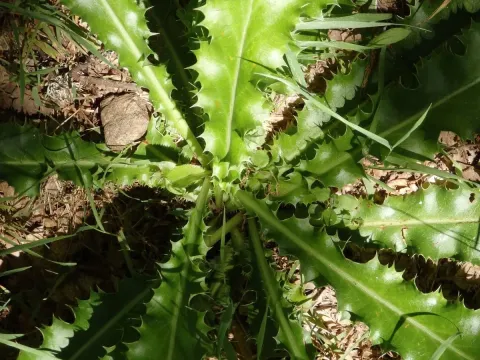
Eryngium duriaei
Eryngium duriaei
Sowing seeds of Eryngium duriaei is most effective when done in late autumn, allowing the seeds to undergo natural winter stratification. This process breaks dormancy and ensures uniform germination in the following spring.
What the section contains
Eryngium duriaei
For spring sowing, seeds must be stratified artificially. Place seeds in a moist substrate in a refrigerator at temperatures between 2 and 5 degrees Celsius for approximately six weeks before sowing into trays.
The seeds should be sown shallowly, barely covering them with a thin layer of fine soil or vermiculite, as they require a certain amount of light to trigger germination effectively.
When starting in a greenhouse, ensure the temperature remains stable. Once seedlings reach the stage of having two true leaves, they can be transplanted into individual pots to develop a robust root system before field planting.
Optimum plant spacing in the field should be approximately 40 centimeters apart. This spacing ensures adequate airflow and prevents moisture accumulation around the base, which is crucial for the plant's health.
Eryngium duriaei belongs to the Apiaceae family and is recognized as a hardy perennial suited to arid conditions. Originating from mountainous regions, this plant is well-adapted to rocky and poor soils.
The most important requirement for successful cultivation is excellent drainage. As a xerophytic species, it cannot tolerate "wet feet" and will quickly succumb to root decay if the soil remains waterlogged for extended periods.
It thrives in full sun, which is essential for developing the deep, intense metallic blue color in its bracts and stems. Shaded locations result in weak, spindly growth and reduced flowering performance.
The plant prefers neutral to slightly alkaline, well-draining sandy or loamy soils. If the soil is heavy clay, amending it with grit or coarse sand is highly recommended to improve aeration and prevent root rot.
Once established, Eryngium duriaei is highly drought-tolerant. Supplemental irrigation is only necessary during prolonged dry spells in the first growing season; thereafter, it thrives on natural precipitation.
The most significant threat to the health of Eryngium duriaei is crown rot, caused primarily by poor soil drainage during the wet winter months. Prevention is the best strategy through proper soil site preparation.
Aphids can occasionally infest the growing tips during the spring months. While generally not fatal, these pests can distort flower stalks, and early intervention with organic soap-based sprays is usually effective.
Powdery mildew may occur if planting density is too high or if airflow is restricted. Ensuring correct spacing between rows and individual plants significantly reduces the risk of this fungal issue.
Slugs and snails can cause cosmetic damage to the basal leaves of young plants. Setting up barriers or using natural deterrents around the plants in the spring can protect the foliage during its most vulnerable stage.
Regular monitoring of the plantation is advised. Early identification of affected plants allows for the removal and isolation of the source of infection, preserving the overall health of the crop.
Harvesting Eryngium duriaei for floral use or dried decorations should occur at the peak of bloom. The bracts and stems display the highest color intensity when the flowers are fully opened but before seeds begin to mature.
Using a clean, sharp knife or garden shears is necessary for harvesting. Cut the stems close to the base of the plant to maximize the stem length, being careful not to damage the crown of the perennial.
Post-harvest, remove any foliage from the lower part of the stem to improve airflow. Hang the harvested stems in bunches in a dark, dry, and well-ventilated room to preserve their vibrant blue coloration during the drying process.
Avoid excessive sunlight during the drying phase, as UV rays can cause the pigments in the bracts to fade prematurely. Once fully dried, the stems remain stiff and decorative for several months.
At the end of the season, cut back the remaining plant foliage to about 5-10 centimeters from the ground. This maintenance practice cleans the area and encourages the plant to store energy for robust growth in the following year.