
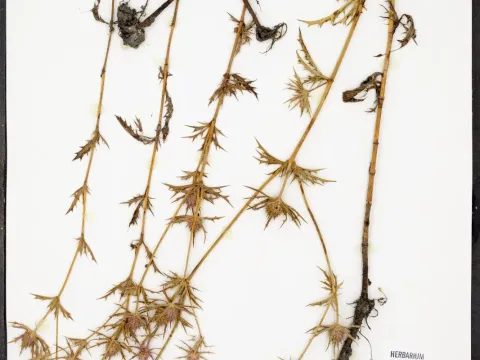
Eryngium diffusum
Eryngium diffusum
Seeds of Eryngium diffusum are best sown in late autumn directly into the open ground. This allows the seeds to undergo natural stratification through winter, which is essential for uniform germination in the spring.
What the section contains
Eryngium diffusum
For spring planting, seeds must be artificially stratified in a refrigerator for at least two months. Sowing depth should be minimal, as the seeds require sufficient light exposure for the germination process to initiate successfully.
Maintain a spacing of 30 to 40 centimeters between individual plants. Adequate spacing is crucial for airflow, which helps in preventing fungal diseases common in dense, crowded plantings.
When starting seeds indoors, use peat pots to minimize root disturbance during transplanting. The plant develops a long taproot, which is sensitive to damage, so early and careful handling is highly recommended.
Development is slow during the first year, focusing mainly on the establishment of the basal leaf rosette. The plant typically begins to bloom and produce its characteristic flowering stems in the second year.
Eryngium diffusum belongs to the Apiaceae family. It is a sun-loving plant that thrives in open, brightly lit environments. Lack of sufficient sunlight will result in poor coloration and weakened flower production.
The plant prefers light, sandy, or well-drained loamy soils. It is highly intolerant of waterlogged soil conditions, which frequently cause root rot and rapid decline of the entire plant population.
This species is exceptionally drought-tolerant, making it an ideal choice for xeriscaping. Excessive fertilization should be avoided, as it encourages weak, lush growth that is more susceptible to environmental stress.
A neutral to slightly alkaline soil pH is optimal for growth. On more acidic soils, the addition of lime can improve the plant's health and enhance the intensity of its structural development.
The plant is hardy and adapts well to various climatic conditions. It does not require winter protection, though it is essential to keep the area free of competitive weeds during its initial growth phase.
Eryngium diffusum is primarily cultivated for the floristry trade as a high-quality dried flower. The yield of the crop is measured by the number and quality of its steel-blue floral bracts.
Harvesting should occur when the flowers have reached their peak color and structural maturity. Cutting too early may cause the stems to wilt, while waiting too long can lead to seed shedding and color loss.
For medicinal use, the roots are harvested in the autumn of the second or third year. The plant contains bioactive compounds, including essential oils and flavonoids, which are valued in traditional herbal applications.
Proper post-harvest drying is critical to maintaining the plant's aesthetic value. Hanging stems upside down in a dark, well-ventilated room preserves the shape and color for extended storage periods.
The plant is a sustainable crop, as it does not require frequent replanting. A single establishment can remain productive for several years, providing consistent yields for small-scale growers.
Root rot is the most significant threat to the health of Eryngium diffusum, almost always linked to poor soil drainage. Improving the soil structure is the most effective way to prevent this issue.
Powdery mildew can occur in regions with high humidity or poor air circulation. Regular monitoring and thinning out the plants can keep the foliage healthy and reduce the risk of outbreaks.
Aphids and spider mites are common pests that target young, succulent growth. Using integrated pest management practices, such as applying neem oil or insecticidal soaps, is usually sufficient for control.
Soil-borne pests like wireworms may attack the taproot, weakening the plant's vitality. Clearing the plot of weeds and previous grass cover before planting significantly reduces the risk of such infestations.
General hygiene, such as removing fallen leaves and diseased stems, is necessary to prevent the accumulation of pathogens that could lead to the infection of the entire plant bed.