
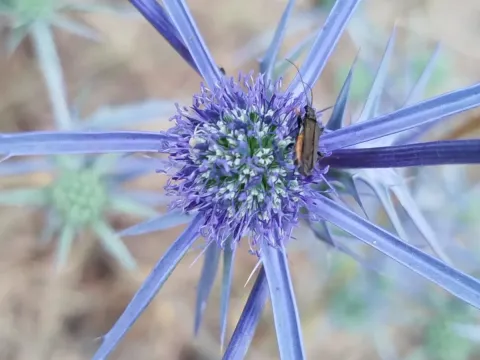
Eryngium creticum
Eryngium creticum
Eryngium creticum, commonly known as Cretan eryngo, is a perennial herbaceous plant belonging to the Apiaceae (celery) family. It is characterized by its robust taproot and branched, prickly stems, which are typical adaptations to Mediterranean environmental conditions.
What the section contains
Eryngium creticum
The native range of this species encompasses the Eastern Mediterranean, including parts of the Middle East. It is a highly xerophytic plant, capable of thriving in arid environments with low annual precipitation and intense solar radiation.
To cultivate Eryngium creticum successfully, it is essential to provide a location with full sun exposure. The plant requires significant heat for its development and is highly sensitive to shading, which significantly impacts its vigor and reproductive success.
Soil requirements focus on excellent drainage. The plant excels in stony, sandy, or light loam soils. Heavy, clayey soils that retain moisture are typically detrimental to the root system, often leading to rot and poor growth.
The plant demonstrates remarkable tolerance to extreme temperature fluctuations. Its natural resilience allows it to remain productive even under harsh summer conditions, making it an excellent candidate for regions where water resources for irrigation are limited.
The economic utility of Eryngium creticum is diverse, spanning industries from herbal medicine to professional floristry. The plant contains various phytochemicals, including flavonoids, which are studied for their potential therapeutic benefits.
In apiculture, this species is highly valued as a late-season honey plant. Its ability to produce nectar during periods of high heat and dryness makes it a crucial resource for supporting pollinator populations in agricultural landscapes.
Floriculture represents a significant sector for this crop. Its distinct metallic blue coloration and structural, long-lasting inflorescences make it an ideal material for dried arrangements, requiring minimal processing post-harvest.
The crop's management is relatively low-input compared to traditional vegetable crops. It requires very little fertilization or maintenance, as it is physiologically adapted to poor-nutrient substrates, thus lowering production costs.
Future applications of this plant also include landscape restoration and xeriscaping, where its ecological benefits—such as soil stabilization and pollinator support—provide additional value beyond commercial harvest.
The primary threat to the stability of Eryngium creticum stands is poor drainage. Chronic waterlogging causes root decay and significantly reduces the plant's lifespan, necessitating careful site selection before planting.
Aphid infestations can occur on young, succulent growth during the early stages of the season. Integrated pest management strategies should be applied to prevent these insects from weakening the plants and facilitating secondary infections.
Powdery mildew may develop if the plants are situated in areas with stagnant air or high humidity, particularly during the transition between spring and summer. Promoting airflow through proper spacing is the best cultural control method.
Soil-dwelling pests, such as wireworms, can damage the taproot, particularly in areas previously used for cereal crops. Soil analysis prior to planting is recommended to determine the potential pressure from these pests.
Monitoring the health of the plants throughout the growing season is critical for maintaining high-quality harvests. Ensuring that the foliage remains dry and the soil remains well-aerated is the foundation of successful crop protection for this species.