
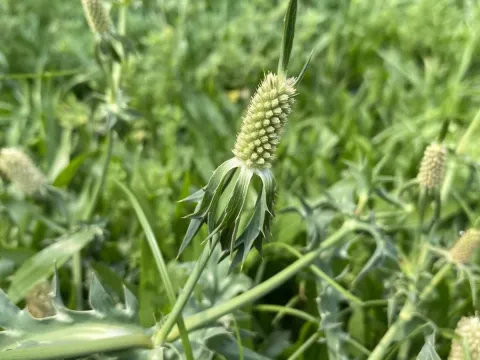
Eryngium coronatum
Eryngium coronatum
The sowing of Eryngium coronatum seeds is primarily carried out in the spring once soil temperatures reach 10–12°C. Winter sowing is also possible, which facilitates natural stratification of the seeds and improves germination rates in the spring.
What the section contains
Eryngium coronatum
Seeds should be covered with no more than 1–2 centimeters of soil, as light is required for successful germination. After seedlings emerge, it is recommended to thin them out to ensure each plant has enough space for developing a robust root system.
The crop is characterized by slow initial growth, so maintaining weed-free fields is essential. During the first year, the plant focuses on forming a basal rosette of leaves and active root system development.
Planting density depends on the purpose of cultivation; for ornamental displays, a 40x40 cm spacing is common, while for cut flower production, density may be increased to encourage upright stems.
When propagating via root division, the process should be performed in early spring or late summer, allowing the plants sufficient time to establish themselves before the onset of extreme weather.
Eryngium coronatum is a perennial herbaceous plant belonging to the Apiaceae family, possessing high adaptability. It prefers open, well-lit locations with direct sunlight exposure throughout the day.
The plant has specific soil requirements: poor, sandy, or rocky, well-drained soils are most favorable. The species is highly sensitive to waterlogging in the root zone, which can lead to rapid plant mortality.
The optimal pH level for this crop ranges from slightly acidic to neutral. High concentrations of organic fertilizers in the soil are unnecessary, as they may lead to excessive vegetative growth at the expense of floral development.
The plant demonstrates significant drought tolerance, making it a viable candidate for cultivation in regions with hot, dry summers. It withstands direct insolation and high air temperatures without the need for additional irrigation.
In regions with harsh winters, minimal cover or mulching is required, although the species is generally considered quite winter-hardy. The primary risk factor is winter dampness, which can cause crown rot.
The yield of Eryngium coronatum is measured by the number of marketable stems suitable for use as dried or fresh-cut flowers. On average, one square meter can produce 15 to 20 high-quality floral spikes.
Peak productivity is typically reached in the second or third year after planting, once the plant reaches full biological maturity. It is crucial to follow proper cutting techniques to avoid damaging the growth point of the basal rosette.
To maintain productivity in subsequent years, annual applications of moderate potassium-phosphorus fertilizers are recommended. Nitrogen fertilizers should be limited to prevent stem lodging.
Economic uses include applications in landscape design and as a premium component in floral arrangements. The plant is prized for its ability to retain its form and color long after the drying process is complete.
With proper management, a plantation can remain productive for 5–7 years before requiring rejuvenation or relocation to a fresh plot with renewed soil composition.
The main biological threat to Eryngium is root rot, resulting from excess soil moisture or heavy substrate composition. Quality drainage is the primary preventative measure against this pathology.
Common pests include aphids and spider mites, which may infest young leaf tissues during periods of extreme drought. If infestations are detected, systemic insecticides or acaricides should be applied.
The plant may also be susceptible to powdery mildew under conditions of high humidity and poor ventilation. Treatment with copper or sulfur-based fungicides is effective for disease management.
To protect against soil-borne pests like wireworms, preventative pre-sowing soil treatments are recommended. Implementing crop rotation significantly reduces the risk of pathogen buildup in the soil.
Maintaining sanitary conditions in the field is vital; timely removal of plant debris in the autumn minimizes the risks of fungal disease spread in the following season.
Flower harvest is performed once the inflorescences are fully open and have attained their characteristic intense color. For dried flower production, harvesting should occur during morning hours after dew has evaporated.
Harvested stems are tied into small bunches and hung upside down in a dark, well-ventilated room. This method ensures the preservation of natural color and structural integrity of the petals for an extended period.
For fresh-cut use, stems should be harvested with a sharp tool, making the cut as close to the rosette base as possible. Stems should be placed in cold water immediately after cutting to prevent rapid wilting.
Transportation must be handled in an upright position to prevent the deformation of the floral spikes. Quality dried stems should not shed components under light mechanical stress.
To collect seeds, the strongest flower stalks should be left on the plant until they turn brown. After maturity, seed heads are harvested, dried, and threshed, followed by thorough cleaning to remove impurities.