
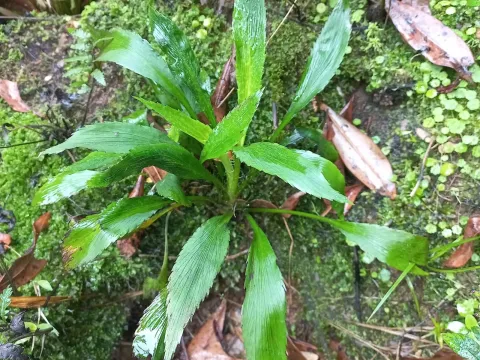
Eryngium dusenii
Eryngium dusenii
Eryngium dusenii is a distinctive perennial member of the Apiaceae family. Originating from the rugged high-altitude regions of South America, specifically Brazil, this plant has evolved to thrive in environments that would be challenging for many other species.
What the section contains
Eryngium dusenii
The botanical profile of this culture features rigid, spiny foliage and striking blue, metallic-looking inflorescences that resemble thistles. These adaptations are essential for survival in windy, exposed mountain habitats where the plant is native.
Propagation of this species relies on seeds that require a period of cold stratification to overcome natural dormancy. Successful commercial production requires mimicking these winter conditions, usually through refrigeration or late autumn sowing.
Seed depth should be minimal as they require some light for germination. In nursery settings, using sterile, well-draining media is crucial to prevent damping-off, which is a common threat during the early seedling stage.
Germination is often slow and sporadic, requiring patience and consistent moisture levels. Once established, the seedlings develop a robust root system that characterizes the resilience of the mature plant.
The primary prerequisite for growing Eryngium dusenii is exceptional soil drainage. The species is highly susceptible to root rot in saturated or heavy clay soils, making sandy or rocky loam compositions the ideal substrate for cultivation.
As a sun-loving plant, it requires full sun exposure to develop its characteristic intense blue coloration. In shaded environments, the stems become weak and leggy, and the plant fails to produce the desired aesthetic quality for commercial purposes.
Climate adaptability is one of the plant's strengths. It is well-suited to regions with wide temperature fluctuations, showing high cold tolerance, which allows it to be cultivated in diverse geographic zones without specialized winter protection.
Nutrient requirements are relatively low compared to intensive greenhouse crops. Over-fertilization, especially with nitrogen, results in lush green growth at the expense of floral development and general structural integrity of the stems.
Routine maintenance involves controlling weeds during the early growing season. Once the plant is established, it becomes highly drought-tolerant and requires minimal intervention, making it a sustainable choice for low-maintenance landscapes.
The economic utility of Eryngium dusenii is focused on the ornamental and floriculture sectors. The inflorescences are highly sought after for both fresh floral arrangements and, more importantly, for high-quality dried flower production.
Harvesting for dried flowers should occur at the peak of the flowering cycle, just as the bracts become fully colored and rigid. Proper timing is critical to ensure that the color is preserved throughout the drying process.
Post-harvest handling requires hanging the stems in a cool, dark, and well-ventilated space to ensure uniform drying. This process preserves the metallic blue sheen and the architectural structure of the thistle-like heads.
In landscape management, the plant provides excellent structure and interest. It serves as a keystone species in rock gardens and sustainable xeriscaping projects, where its resilience reduces the need for supplemental irrigation and chemical inputs.
Seed collection is performed at the end of the season once the seed heads have matured and turned brown. The seeds should be cleaned and stored in dry conditions to maintain viability for the following planting season.