
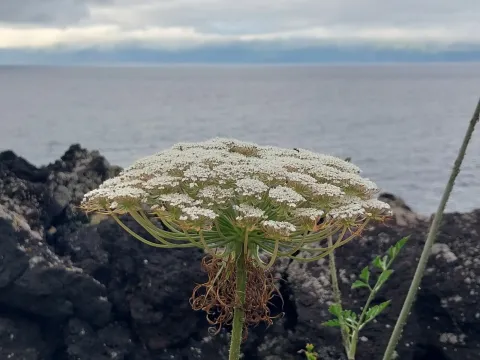
Azorean carrot
Daucus azoricus
The Azorean carrot (Daucus azoricus) is a specialized member of the Apiaceae family, native to the specific environmental conditions of the Azores islands.
What the section contains
Azorean carrot
Sowing requires careful selection of site, preferably in well-drained, porous soil that mimics the volcanic substrates characteristic of its natural habitat.
Seeds should be planted at a shallow depth, usually not exceeding 2 cm, to ensure adequate access to moisture and oxygen during the germination process.
The ideal planting time is during the mild spring months, avoiding the extremes of temperature that can inhibit root development in the early stages.
Proper spacing between rows is essential to promote good airflow, which is critical for reducing the risk of fungal infections in the leafy canopy.
This crop thrives in temperate oceanic climates where the temperature remains stable without significant frost or extreme heatwaves throughout the year.
The plant demands high levels of light, but it is sensitive to intense midday sun, often requiring slight natural shading to maintain the quality of the foliage.
Soil management is paramount, focusing on maintaining a slightly acidic to neutral pH and ensuring the substrate is rich in organic matter but low in excessive nitrogen.
Consistent moisture is needed, yet the soil must remain loose; heavy or compacted soils will lead to root deformation and stunted growth of the main taproot.
Wind protection is another key requirement, as the islands' strong gusts can cause mechanical damage to the leaves and induce water stress.
Fungal diseases such as powdery mildew and various types of root rot remain the primary biological threats to the cultivation of Daucus azoricus.
Pest pressure from insects like the carrot rust fly can severely compromise the root structure, necessitating proactive management and monitoring strategies.
Implementing a strict crop rotation schedule is the most effective way to prevent the buildup of soil-borne pathogens and pests in the field.
Weed control must be handled manually or through shallow mechanical cultivation to avoid damaging the shallow root systems of the carrot plants.
Sanitation practices, such as removing infected debris at the end of the season, are crucial for maintaining a healthy growing environment for future crops.
Harvesting should be executed when the carrot reaches peak maturity, typically signaled by the yellowing of the lower leaves of the foliage.
Care must be taken during extraction from the soil to avoid snapping the root or creating bruises, which can serve as entry points for decay organisms.
Immediately post-harvest, the foliage should be trimmed back to prevent moisture loss from the root, which helps in extending shelf life.
The roots should be stored in a cool, dark, and well-ventilated environment to maintain their natural crispness and nutritional profile over several weeks.
Quality control during harvest involves separating damaged roots from healthy ones to ensure that potential rot does not spread during the storage phase.