
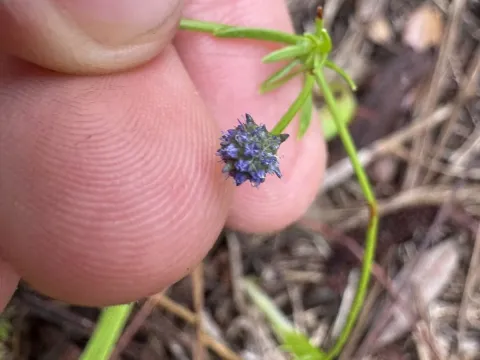
Baldwin's eryngo
Eryngium baldwinii
Baldwin's eryngo, scientifically known as Eryngium baldwinii, is a member of the Apiaceae family. This perennial plant is native to the southeastern United States, where it thrives in open, sandy habitats and pine woods.
What the section contains
Baldwin's eryngo
Botanically, it is characterized by its distinct, spiny, and often bluish inflorescences that attract various pollinators. The plant develops a robust taproot system, which serves as an adaptation to the dry, sandy soils common in its natural range.
Regarding soil requirements, this species demands excellent drainage. It does not tolerate heavy or waterlogged soils, as these conditions rapidly promote root rot. A sunny, open location is essential for maintaining the health and vibrant color of its foliage.
In terms of climatic adaptability, Baldwin's eryngo is well-suited to warm regions. It is highly drought-tolerant once established, requiring supplemental irrigation only during prolonged dry spells in its early growth stage.
Horticulturally, it is utilized as an ornamental plant in xeriscaping and sustainable garden design. Its resilience and unique appearance make it an excellent choice for low-maintenance landscapes in appropriate climate zones.
The primary threats to Baldwin's eryngo are related to fungal pathogens, specifically those that thrive in high humidity. Root rot is the most significant concern, especially if the soil profile does not provide adequate aeration.
Common insect pests include aphids and spider mites, which can cause significant stress to the plant during peak summer months. Monitoring foliage regularly is critical to prevent severe infestations that can compromise the plant's growth.
Environmental stress can also weaken the plant, making it more susceptible to opportunistic diseases. Proper spacing is necessary to ensure adequate airflow, which helps keep the foliage dry and prevents fungal growth.
Avoid over-fertilizing with nitrogen, as this encourages soft, succulent growth that is more attractive to pests and less resistant to environmental stress. Balanced, low-dose fertilizers are generally safer for this species.
Sanitation practices, such as removing dead or dying plant material, are essential in commercial or nursery production settings to reduce the inoculum levels of pathogens that can lead to disease outbreaks.