
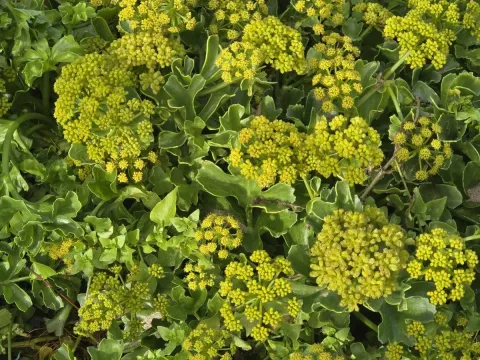
Astydamia
Astydamia
Astydamia (Astydamia latifolia) is a rare halophytic plant belonging to the Apiaceae family. In its natural environment, the plant reproduces through seeds that ripen at the end of the growing season.
What the section contains

Astydamia
For cultivation, it is recommended to sow seeds in well-drained, sandy soil with a high mineral content. Sowing is typically performed in a protected environment or containers during the spring once stable warm temperatures are established.
As an endemic species of the Canary Islands and the African coast, the plant is adapted to specific substrates. In artificial propagation, it is critical to ensure a loose soil structure to prevent moisture stagnation.
Astydamia seeds have a moderate germination period, which may be extended if proper stratification or temperature regimes are not met. Keeping the substrate slightly moist but not waterlogged is considered optimal.
The crop requires sufficient lighting; therefore, if sowing indoors, supplementary lighting must be provided. In nature, seeds are dispersed by wind and sea currents, a factor that should be considered when planning agricultural practices.
Astydamia is a typical representative of coastal flora, possessing a strong ability to tolerate soil salinity. It prefers well-lit areas exposed to direct sunlight.
The plant is demanding regarding temperature: it prefers a mild subtropical climate and does not tolerate sudden freezing temperatures well. The optimal range for active growth is between 18 and 25 degrees Celsius.
Soil requirements include high permeability and a neutral to slightly alkaline reaction. The crop effectively absorbs micronutrients even from poor, rocky, or sandy soils.
Watering should be moderate, mimicking coastal conditions. Excessive moisture combined with low temperatures often leads to the development of root rot.
In terms of agricultural value, Astydamia is considered a promising crop for coastal farming in arid regions. Its ability to survive salt stress makes it a unique subject for research in adaptive agriculture.
The yield of Astydamia in field conditions remains a subject of scientific research, as the crop does not have wide industrial distribution. The green mass of the plant is the primary harvest product.
Under favorable conditions, Astydamia forms a spreading bush with fleshy leaves that store moisture and minerals. With regular harvesting of the greens, the plant is capable of partial regrowth.
Economic use includes the consumption of young leaves, which possess a specific aroma characteristic of many Apiaceae species. In the traditional medicine of its native regions, the plant has long been used as a remedy.
The quantity of harvested biomass depends directly on lighting quality and soil composition. Plants grown with sufficient mineral nutrition exhibit greater biomass and tissue density.
Yield potential could be increased using intensive vegetable farming methods; however, at present, harvest is mostly limited to wild populations or small experimental plots.
The main threat to the crop comes from fungal diseases that develop when the water balance is disturbed or air ventilation is poor. Excess humidity triggers root rot and leaf spotting.
Pests typical of the Apiaceae family can damage young shoots. These include aphids and various types of leaf-eating insects common to coastal ecosystems.
Nematodes can pose a serious risk when grown in sandy soils, damaging the root system and slowing the overall development rate of the plant.
For pest control, it is recommended to use biological methods, minimizing the use of harsh chemicals to ensure the leaves remain safe for consumption.
Disease prevention consists of maintaining proper ventilation, choosing a site with good aeration, and avoiding substrate waterlogging during cold seasons.
Harvesting Astydamia leaves is done manually and selectively to ensure the plant's continued growth. Harvesting is carried out in the morning when the plant has maximum turgor pressure.
For culinary purposes, young, tender leaves are selected before they become too tough or fibrous. Older leaves may accumulate excessive amounts of salts, which can impair their taste.
After harvesting, the greens require rapid processing or cooling, as the fleshy leaves are prone to quick wilting at high ambient temperatures.
Seed material is collected after the umbels are fully ripe and have turned a characteristic brown color. The collected seeds are carefully dried in the shade, protected from direct sunlight.
Seeds should be stored in a dry, cool place in paper bags that allow for air circulation. Properly collected seeds retain high germination rates for 1–2 years.