
Azorella
Azorella
Azorella is a perennial evergreen plant belonging to the Araliaceae family. In its natural habitat, it is most frequently found in the harsh climatic conditions of the Southern Hemisphere, specifically in the high Andean mountains and the subantarctic islands.
What the section contains
Azorella
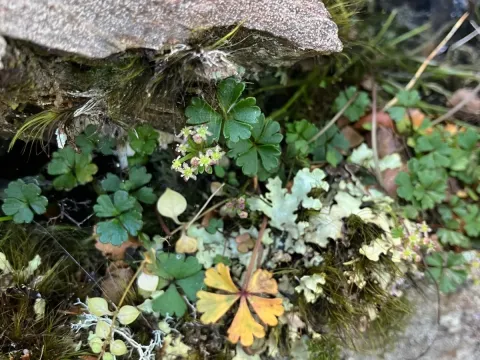
Botanically, the plant forms a dense, tight cushion of small, rigid leaves that create compact, stone-like structures. This unique growth habit allows Azorella to efficiently retain heat and protect itself from the strong, piercing winds typical of its native environment.
For successful cultivation, the plant requires well-drained, rocky, or sandy soils. It is extremely sensitive to excessive moisture, making effective water drainage a critical requirement to prevent root system decay and structural loss.
Azorella thrives in open, sunny locations with ample fresh air circulation. While it can withstand significant temperature fluctuations characteristic of alpine regions, it struggles in extreme heat and stagnant, humid air common in low-lying garden areas.
In ornamental horticulture, this plant is primarily utilized for creating alpine rockeries, gravel gardens, and stone landscapes. Due to its slow growth rate, Azorella remains compact and maintains a highly aesthetic appearance for many years without the need for frequent pruning.
The primary threat to Azorella is excessive moisture near the root collar, which frequently triggers root rot. Failure to provide a substrate with excellent drainage properties almost inevitably results in the loss of plant vigor and the eventual death of the cushion.
Under greenhouse conditions or poor ventilation, the plant can become susceptible to fungal infections. To prevent these issues, it is recommended to ensure free airflow around the cushion and to avoid direct water contact with the foliage during irrigation.
Pests rarely infest this species due to the rigid texture of its leaves. However, during periods of drought or when the plant is stressed, spider mites may sometimes settle deep within the dense structure of the foliage, requiring careful observation.
Disease and pest management are based on strict adherence to agrotechnical standards. The application of systemic fungicides is rarely necessary and should only be considered in the presence of clear infection symptoms, prioritizing formulas that do not scorch the sensitive plant tissues.
A crucial aspect of crop protection is proper wintering. While the plant is inherently cold-hardy, in regions experiencing frost without snow cover, a light protective covering is recommended to shield it from desiccation caused by cold winds, which can lead to foliage dieback.