
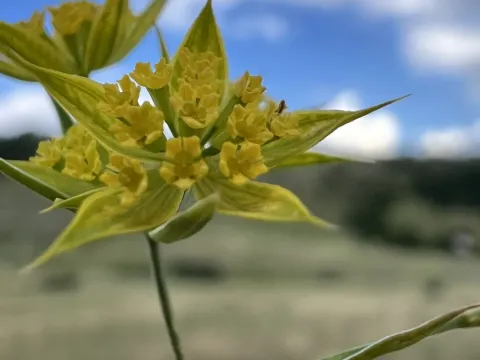
Bupleurum veronense
Bupleurum veronense
Bupleurum veronense is a perennial herbaceous plant belonging to the Apiaceae family. Native to the limestone slopes of Southern Europe, this species has adapted to survive in challenging environments characterized by stony soils and limited nutrient availability.
What the section contains
Bupleurum veronense
The botanical structure of the plant features a branched stem and lanceolate leaves. Its inflorescence consists of small yellow flowers grouped in compound umbels. The taproot system is essential for its resilience, allowing the plant to reach deep water sources during dry seasons.
Cultivation requirements for this crop focus on well-drained, alkaline soils. It performs best in sunny locations where soil moisture is balanced, as it is highly sensitive to waterlogging which can quickly compromise the integrity of the root system.
The climate preference involves temperate conditions with clear seasonal transitions. Being a mountain-origin plant, it is naturally cold-hardy, making it suitable for regions with harsh winters provided the soil remains well-drained to prevent ice crust formation.
Economically, Bupleurum veronense is valued for its phytochemical profile, particularly its high saponin content. These compounds are extracted for pharmaceutical use, primarily to support liver health and manage inflammatory conditions in various medical formulations.
Root rot is the primary threat to the stability of Bupleurum veronense crops. This condition is almost exclusively linked to soil drainage issues, where prolonged dampness provides an ideal environment for pathogenic fungi to attack the plant's vascular system.
Pest pressure from aphids is common, especially during the vegetative growth phase. These insects target the soft tissue of the stems and the developing umbels, which can lead to stunted growth and reduced yields of the target raw material.
Effective disease management relies on preventative agricultural practices. Maintaining correct plant spacing is crucial to ensure adequate airflow, which naturally suppresses fungal proliferation within the crop canopy.
Chemical intervention should be considered a last resort. Given that the end product is intended for therapeutic use, growers typically opt for integrated pest management (IPM) strategies, including the use of beneficial insects and mechanical weeding techniques.
Ongoing scouting and scouting for early signs of disease are essential for commercial success. By identifying issues at the onset, farmers can isolate infected patches and prevent widespread crop loss across the plantation.