


Reference · Crops
Caraway
Carum L.
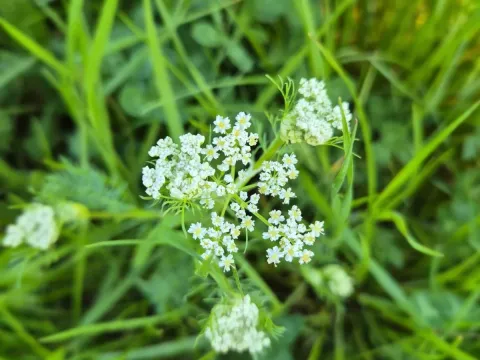
Caraway (Carum carvi) is a biennial herb belonging to the Apiaceae family. During its first year, the plant develops a rosette of leaves and a strong taproot, focusing its energy on building root mass for the second year of production.
1
items
What the section contains
Marketplace
Products in this section · 4


Caraway
The sowing of caraway is typically performed in early spring as soon as the soil is workable, or in late autumn. Early spring sowing is preferred in many regions as it ensures consistent moisture for germination, which is vital for the development of the root system.
When sown in autumn, the seeds undergo natural stratification, which can lead to more uniform emergence in the following spring. It is crucial to sow seeds at a shallow depth of 1.5–2 cm, maintaining row spacing of 30 to 45 cm to optimize the growth environment.
A seed rate of 8–12 kg per hectare is standard for commercial production. Because caraway is relatively slow to establish in its first year, weed management is a critical step to ensure that the young plants are not choked out by faster-growing competitive vegetation.
After seeding, rolling the soil can improve seed-to-soil contact, leading to more reliable germination rates. Field maintenance during the first few weeks is essential to keep the rows clean and facilitate healthy plant development.
Caraway requires sunny, open locations, as shade significantly negatively impacts the essential oil content in the seeds. The plant is hardy and well-adapted to temperate climates, showing good tolerance for cooler spring temperatures during the germination phase.
Ideal soil for caraway is a fertile, well-drained loam or clay-loam with a neutral to slightly alkaline pH. Avoid heavy, waterlogged soils, as they promote root rot and can lead to plant loss during the wetter months of the year.
Consistent moisture is necessary, particularly during the flowering and seed-set phases of the second year. However, good drainage is imperative to prevent water accumulation, which can trigger fungal diseases that affect both root health and foliage.
Fertilization should be based on soil nutrient testing. Caraway generally responds well to organic matter incorporated before planting, supplemented with phosphorus and potassium to encourage robust root development and high-quality seed production.
Crop rotation is vital for sustainable caraway production. It is recommended to wait at least 4 to 5 years before planting caraway on the same land again to reduce the risk of soil-borne pathogens common to the Apiaceae family.
The average yield for caraway typically ranges from 0.8 to 1.5 metric tons per hectare under optimal management practices. The primary harvest occurs during the second year of growth, after the plant has bolted and produced flower umbels.
Quality is heavily dependent on the weather conditions during the maturation phase. Dry, sunny, and warm weather during the final stages of seed ripening is ideal for maximizing the concentration of essential oils, which define the market value of the crop.
Ongoing maintenance, such as inter-row cultivation, ensures that nutrients and moisture are available to the crop, directly influencing the final yield. Micronutrient supplementation during the budding phase can also help improve overall crop performance.
Post-harvest processing involves immediate drying to stabilize the seeds, as high moisture levels can cause rapid spoilage. Proper handling ensures that the seeds retain their characteristic aroma and shelf life for industrial or culinary use.
The crop serves various sectors, including the food industry, spice production, and pharmaceuticals. High-grade caraway seeds are highly valued, making it a potentially profitable crop for farmers who adhere to correct agronomic protocols.
Caraway is susceptible to several fungal diseases, including rust, septoria leaf spot, and powdery mildew. These pathogens can compromise plant vigor and reduce the yield potential by affecting the foliage's ability to photosynthesize effectively.
Integrated pest management strategies, such as crop rotation and the use of resistant varieties where available, are the best methods to control these diseases. Fungicides may be used if threshold levels of infestation are exceeded during the growing season.
Key insect pests include the caraway moth, which can destroy the umbels and significantly reduce seed yield. Aphids and wireworms are also common threats that can affect plant growth, particularly in the seedling or early developmental stages.
Monitoring for signs of infestation is crucial for timely intervention. Cultural controls, such as controlling wild umbelliferous weeds, help break the lifecycle of many pests and diseases.
- Rust (Puccinia petroselini)
- Caraway moth
- Wireworms
- Powdery mildew
When applying pesticides, it is essential to observe the mandatory pre-harvest interval (PHI) to ensure the safety of the final product and compliance with agricultural residue regulations.
Harvesting is performed in the second year when the seeds turn a distinct brown color and moisture levels begin to drop. It is essential to time the harvest accurately, as caraway seeds can easily shatter and fall to the ground if left too long.
A two-stage harvesting process is most effective: swathing the crop first to allow it to dry down, followed by combining to thresh the seeds. This method minimizes shattering losses and ensures higher collection efficiency.
After threshing, the seeds must be cleaned to remove chaff and debris, which can otherwise increase the bulk moisture content and lead to mold development during storage. Proper cleaning is a prerequisite for long-term preservation.
Drying is typically accomplished through natural aeration in ventilated warehouses or using mechanical dryers to reach a moisture content of 12–14 percent. Properly dried seeds are then bagged in breathable packaging for stability.
Final storage should be in a cool, dry, and dark environment to protect the integrity of the essential oils. Maintaining these conditions ensures the product meets high quality standards for export or local market distribution.