
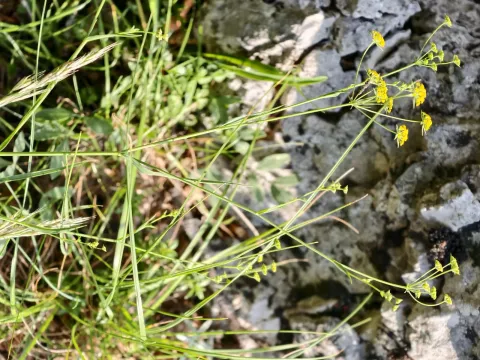
Bupleurum praealtum
Bupleurum praealtum
Bupleurum praealtum is a perennial herbaceous plant, so it is recommended to sow seeds in late autumn, specifically in October or November, to allow for natural stratification.
What the section contains
Bupleurum praealtum
Spring sowing requires pre-treatment of the seeds for one to two months at cold temperatures, as germination rates remain significantly low without this stratification process.
Select well-lit fields with light, structured soil for sowing, as this crop is sensitive to compaction in the topsoil layer.
The planting depth should be between 1 and 2 centimeters, ensuring that optimal soil moisture levels are maintained until seedlings emerge during the spring season.
In commercial production, maintaining row spacing between 45 and 60 centimeters is crucial, facilitating mechanical inter-row cultivation for effective weed control.
The plant thrives in temperate climates and requires well-drained, fertile loamy or sandy-loam soils with a neutral pH level.
The culture exhibits excellent frost resistance, allowing it to successfully overwinter in open field conditions without the need for additional protective cover.
Bupleurum praealtum is sensitive to shading; decreased sunlight intensity leads to a significant reduction in the concentration of bioactive compounds in the plant's aerial parts.
Good agricultural practices include regular inter-row hoeing, as the plant struggles to compete with invasive weeds during the early developmental stages.
Optimal moisture is achieved under moderate rainfall conditions; excessive water or poor drainage can be lethal to the plant's delicate root system.
The yield of Bupleurum praealtum aerial biomass depends heavily on the age of the plantation, peaking in the second and third years after establishment.
On average, growers can harvest between 1.5 to 3 tonnes of dried plant material per hectare, depending on the intensity of fertilization and soil management.
To improve yields, nitrogen-phosphorus fertilizers are applied at the beginning of the vegetation period, stimulating vigorous stem growth before the flowering phase.
The plant is highly valued for its concentration of saponins and flavonoids, necessitating precise harvest timing to preserve the quality of the medicinal raw material.
As a perennial crop, it provides stable yields on the same plot for up to 4-5 years, after which a deep rotation or field renewal is recommended.
The main threats to Bupleurum are fungal infections, such as powdery mildew and root rot, which typically develop under conditions of poor drainage or high humidity.
Disease prevention is primarily achieved through strict crop rotation and avoiding sites that were previously used for other Apiaceae family members.
Pests like aphids and various species of plant bugs can damage young shoots, reducing both overall plant productivity and the quality of the harvested product.
For commercial pest control, authorized biological agents are preferred to ensure the purity and safety of the final medicinal-grade raw material.
Early identification and removal of infected specimens, combined with keeping the field free of weed hosts, are critical components of an effective plant protection strategy.
Harvesting should occur during the period of peak flowering, as this is when the concentration of beneficial active compounds in the leaves and stems is at its maximum.
The biomass is harvested by cutting at a height of 10-15 centimeters above the soil level, using either specialized machinery or manual tools to ensure plant preservation.
Once collected, the green mass must be transported to drying facilities immediately to prevent degradation caused by fermentation processes.
Drying is performed in well-ventilated rooms or professional dehydrators at temperatures not exceeding 45 degrees Celsius to preserve the structural integrity of the flavonoids.
The final dried product is milled and packed into airtight, light-protected containers to ensure long-term storage without losing its potent medicinal properties.