
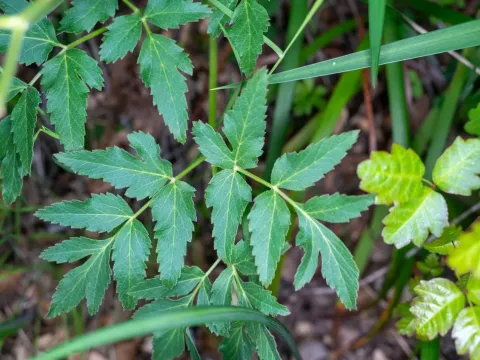
California angelica
Angelica californica
The seeds of California angelica show better germination rates when they are fresh. For the best agricultural results, it is recommended to sow seeds in late autumn, allowing them to undergo natural stratification during the winter months.
What the section contains
California angelica
If spring sowing is preferred, the seeds must be cold-stratified for approximately 60 days to break dormancy. This process ensures a more uniform emergence of seedlings across the field.
Seeds should be covered with a thin layer of soil, as they are light-dependent for successful germination. Keeping the seedbed consistently moist is essential until the plants are well-established.
Recommended spacing for commercial production is 50–60 cm between rows, allowing the rosettes to spread effectively during their vegetative phase without overcrowding.
Transplanting seedlings from a greenhouse can increase the survival rate compared to direct field sowing, providing a more reliable crop density for farmers.
California angelica belongs to the Apiaceae family and is a robust herbaceous perennial. It is native to the moist coastal regions of California, where it thrives in shaded and humid environments.
The plant requires deep, fertile, and moisture-retentive soils. It performs poorly in heavy clay if the drainage is insufficient, as it is susceptible to root rot in saturated conditions.
Light requirements for this species are partial shade. In its natural habitat, it grows under forest canopies, so in an agricultural setting, site selection should avoid intense full-day sun exposure.
Regarding climate, the species is relatively cold-tolerant. In regions with severe winters, covering the soil with straw or mulch is advised to protect the active root crowns from freezing.
Soil nutrient levels should be managed through organic amendments. Adding mature compost promotes healthy root development and supports the rapid growth of large, compound leaves.
Slugs and snails are the primary pests that damage the lush foliage of young plants, especially in the humid conditions that California angelica prefers.
Powdery mildew is a significant threat during periods of poor air circulation and high humidity, which can weaken the plants and reduce their aesthetic or medicinal quality.
Root rot, often caused by waterlogging, is a frequent issue if the site lacks proper drainage, necessitating careful water management and site preparation.
Aphids occasionally infest the flower stalks during the peak growing season, potentially causing sap loss and attracting secondary fungal infections to the plant tissues.
Effective management includes regular scouting for pests and adhering to a strict crop rotation schedule to avoid soil-borne pathogens common to the Apiaceae family.