
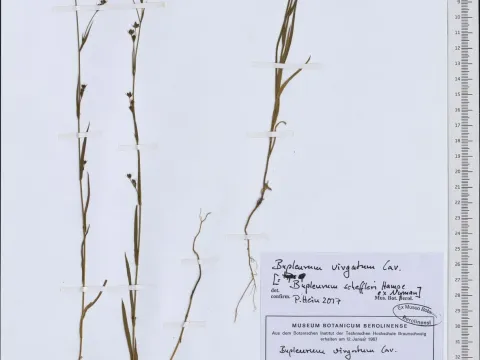
Bupleurum virgatum
Bupleurum virgatum
Bupleurum virgatum is a perennial herbaceous plant belonging to the Apiaceae family. It is native to mountainous regions, where it has evolved to thrive in rocky, well-drained soil environments. The plant is characterized by its slender, branched stems and glaucescent leaves, which are well-adapted to high-altitude sun exposure.
What the section contains
Bupleurum virgatum
The crop requires full sun exposure and well-drained, neutral to slightly alkaline soil to flourish. It exhibits significant drought tolerance once established, due to its deep taproot system. However, in the early growth stages, consistent soil moisture is essential for proper seed germination and root development.
Climate adaptability is one of its notable traits, as the species is resistant to cool temperatures and variable weather conditions. Nevertheless, it does not tolerate waterlogging, which often leads to root rot. Good air circulation is crucial to prevent moisture buildup around the base of the plant.
Agrotechnical management involves careful weeding during the first season of growth, as the plants grow slowly and are sensitive to competition. Once the plants reach maturity, they become more robust. Minimal fertilization is generally required, focusing on providing essential micronutrients rather than heavy nitrogen applications.
The primary economic use of Bupleurum virgatum is in the pharmaceutical and herbal medicine industry. The plant contains bioactive compounds that provide hepatoprotective and choleretic properties. Furthermore, its unique architectural form makes it a point of interest for ornamental gardens focused on native flora.
Common pests affecting this crop include aphids and spider mites, particularly in hot, arid conditions. These pests can significantly stunt the growth of young plants. Integrated pest management strategies, focusing on biological controls, are highly recommended to maintain the quality of the medicinal material.
Fungal diseases are a major concern, particularly powdery mildew and various leaf spot pathogens. These flourish in environments with poor ventilation or high humidity levels. Maintaining adequate spacing between plants is the most effective cultural method to reduce the incidence of these infections.
Root pathogens such as Fusarium species can be devastating in areas with heavy or compacted soils that retain too much moisture. Proper soil drainage and avoiding over-irrigation are key preventive measures. Implementing a proper crop rotation plan is essential to prevent soil-borne diseases.
Nematodes are another potential threat that can affect the health of the root system. Detection requires soil testing in infested areas. If damage is observed, it is recommended to stop cultivation on that specific plot for several years to allow the soil to naturally recover.
Overall plant health is sustained through vigilant monitoring and early intervention. Since the crop is primarily intended for medicinal use, the application of chemical pesticides should be kept to an absolute minimum, ensuring the final product remains free of harmful residues.