
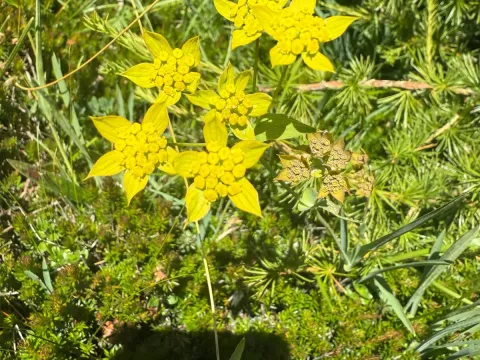
Bupleurum ranunculoides
Bupleurum ranunculoides
Bupleurum ranunculoides, belonging to the Apiaceae family, is a perennial herbaceous plant native to high-altitude mountainous regions. It is highly adapted to stony and limestone soils that provide excellent natural drainage.
What the section contains
Bupleurum ranunculoides
The plant thrives in cool, alpine climates characterized by high light intensity. Its physical structure, featuring a basal rosette of narrow leaves and delicate umbel inflorescences, reflects its adaptation to rocky and exposed environments.
In terms of soil requirements, the species demands a well-aerated substrate. Any tendency toward waterlogging or heavy, compacted soil will negatively impact root health and result in premature plant mortality.
Botanically, it is recognized for its unique yellow-flowered umbels. Its resilience to low temperatures makes it a potential candidate for cultivation in cooler climates, provided the soil drainage is managed appropriately.
The primary economic value of this crop lies in its pharmaceutical potential. The plant contains a complex profile of saponins and flavonoids, which are traditionally valued for their hepatoprotective and choleretic properties.
Propagation is most successfully achieved through seeds, although they exhibit deep dormancy. To initiate germination, seeds must undergo a cold stratification period lasting 8 to 12 weeks at temperatures near freezing.
Sowing should ideally occur in late autumn to allow for natural stratification or in early spring under controlled temperature conditions. It is crucial to maintain temperatures between 10°C and 15°C for optimal seedling emergence.
Seeds should be sown at a shallow depth of approximately 0.5 cm. Covering them with a thin layer of sand or fine gravel improves aeration and mimics the natural alpine conditions where the species grows natively.
Growth during the first year is typically slow, as the plant prioritizes root system development and the formation of the initial rosette. Weed management is critical during this establishment phase to prevent competition for nutrients.
Spacing plants at least 20–25 cm apart ensures adequate air circulation. This spatial arrangement is essential for mitigating the risk of fungal infections that can occur in dense plantings.
Root rot is the most significant threat to Bupleurum ranunculoides. It is primarily caused by poor drainage and excessive irrigation, making it vital to monitor soil moisture levels closely throughout the growing season.
Powdery mildew and various leaf spot pathogens can occur if humidity levels remain high around the foliage. Ensuring proper airflow and avoiding overhead irrigation can significantly reduce the incidence of these diseases.
Slugs and snails present a persistent challenge, especially during the early stages of plant growth. Installing copper barriers or using organic bait traps is often necessary to protect young rosettes from damage.
Aphids can occasionally colonize the plants during warmer spells. While they rarely cause fatal damage, their presence can weaken the plants and facilitate the spread of secondary viral or bacterial infections.
Maintaining strong plant health through proper nutrient balance is the best defense. Avoiding excessive nitrogen fertilization prevents succulent growth that attracts pests and makes the plant susceptible to environmental stress.