
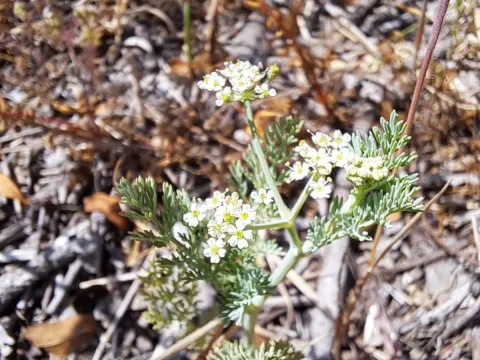
Capnophyllum
Capnophyllum
Capnophyllum is a genus within the Apiaceae family, native to specific Mediterranean coastal habitats. In agricultural systems, seeds are typically sown in late autumn to utilize natural winter stratification, which is crucial for germination.
What the section contains

Capnophyllum
For spring planting, seeds must undergo cold stratification in a controlled environment for at least 30 days. This process mimics natural seasonal cycles and is vital for breaking seed dormancy.
Seeds should be planted at a shallow depth of 1–2 cm. The soil must be fine-textured to ensure optimal contact, and moisture should be maintained until the emergence of the first true leaves.
Row spacing should be maintained between 30 and 45 cm. This allows for adequate canopy development and provides the necessary space for weeding and post-emergence cultivation practices.
Once seedlings have established their root systems, they become more resilient. It is important to thin the plants to ensure each individual specimen has enough space to develop its rosette.
Capnophyllum thrives in well-drained, sandy, or loam-based soils. It is highly intolerant of waterlogging, which often leads to rapid deterioration of the taproot system.
The plant is naturally adapted to sunny and exposed environments. Adequate solar exposure is required for the plant to achieve its full potential regarding biomass and essential oil production.
In terms of moisture, it is a drought-tolerant crop. Excessive irrigation is generally unnecessary and can promote the development of fungal pathogens, specifically in the root zone.
Soil pH should ideally be neutral. High acidity levels can inhibit nutrient uptake, leading to chlorosis and reduced growth rates, which necessitates regular soil testing.
Effective management includes light hoeing between rows to break surface crusting. This improves soil oxygenation and prevents unnecessary moisture loss during hot and dry spells.
Fungal infections, particularly powdery mildew and root rots, represent the most significant threat to this crop. These are exacerbated by high humidity and poor air circulation.
Pests such as aphids and specialized coleoptera species can damage the floral parts. Integrated Pest Management (IPM) strategies, including biological control, are recommended for large-scale production.
Cultural control, such as removing infected plant debris immediately, is essential to minimize the inoculum load in the field for subsequent growing seasons.
Proper crop rotation is necessary. The plant should not be grown in the same plot more than once every three years to prevent the buildup of soil-borne pathogens and pests.
Wind-borne pathogens can occasionally affect leaf tissue. Using windbreaks or selecting sheltered fields can help maintain the integrity of the foliage throughout the growing season.
The optimal harvest timing for green parts is at the early flowering stage. At this phenological phase, the concentration of secondary metabolites is at its peak for medicinal use.
Seed harvesting should be timed carefully. Since the seeds shed easily once mature, producers must monitor the crop closely to avoid yield loss due to spontaneous shattering.
After harvest, rapid drying is required to prevent mold formation. Drying should take place in a cool, dark, and well-ventilated area to protect sensitive essential oils.
Root harvesting, if applicable, should be conducted at the end of the first season. Roots must be washed, dried, and stored in a manner that preserves their chemical composition.
Proper post-harvest storage involves sealed, dry containers kept away from direct heat sources to ensure long-term stability and quality of the raw material.