
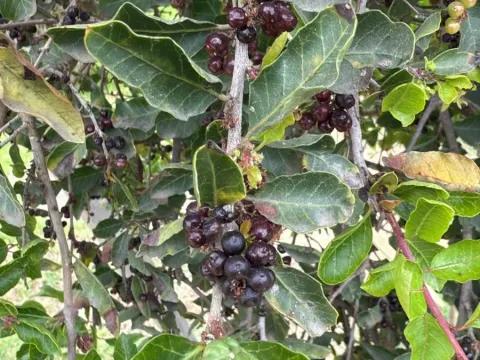
Schinus latifolia
Schinus latifolia
Schinus latifolia is a resilient evergreen shrub or small tree belonging to the Anacardiaceae family. Native to the central and northern regions of Chile, this species has evolved to thrive in arid Mediterranean-type environments.
What the section contains
Schinus latifolia
The plant requires full sun exposure to maintain its dense foliage and healthy growth patterns. It is highly valued in agriculture for its exceptional drought tolerance, making it a viable candidate for reforestation or xeriscaping in arid climates.
In terms of soil requirements, Schinus latifolia is not demanding. It flourishes in well-drained, sandy, or rocky soils with neutral to slightly alkaline pH levels. Poor drainage and waterlogging are the primary factors that lead to plant failure.
Regarding climate, the plant is not frost-hardy and performs best in regions with mild winters and hot, dry summers. It can withstand significant temperature fluctuations common in its native habitat but requires protection from hard frosts.
Agricultural management is relatively simple and involves occasional pruning to maintain plant shape and ensure structural integrity. Young plants may benefit from supplemental irrigation during the establishment phase to encourage deep rooting.
The primary agricultural and economic use of Schinus latifolia lies in its ornamental value for landscaping and soil stabilization. Additionally, its components, particularly the fruits and resinous exudates, are sometimes harvested for traditional botanical applications.
Harvesting for botanical purposes is typically done when fruits reach maturity, indicated by a change in texture and color. Post-harvest, the material must be dried carefully to preserve the essential oils contained within the tissues.
The plant is susceptible to common pests such as scale insects and spider mites, which can be managed with proper ventilation and monitoring. Root rot, caused by various soil-borne fungi, remains the most significant threat if moisture levels remain too high.