
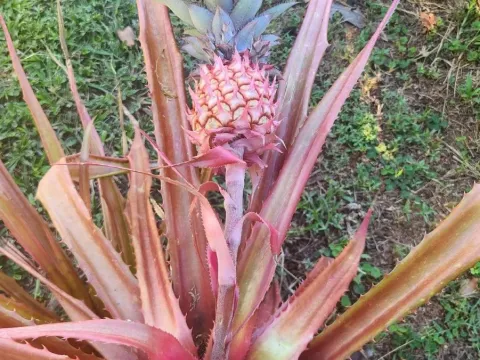
Ananas ananassoides
Ananas ananassoides
Ananas ananassoides is a perennial herbaceous plant belonging to the Bromeliaceae family. It is recognized as a wild relative of the common pineapple (Ananas comosus) and is well-adapted to the ecological niches of tropical South America.
What the section contains
Ananas ananassoides
The plant thrives in regions with warm temperatures, typically ranging from 20°C to 30°C. It requires well-drained, acidic soil to prevent root rot, which is a common issue for many bromeliads when grown in improper environments.
Botanically, it features a rosette of rigid, spiny leaves that act as a water-harvesting system. The inflorescence grows from the center, producing small fruit that is distinctively different from the large, fleshy pineapples sold in supermarkets.
High levels of solar radiation are essential for the metabolic processes of this species. It is specifically adapted to open habitats, although it can tolerate partial shade if the light intensity remains sufficiently high for photosynthesis.
Agricultural management requires careful attention to spacing to allow for adequate airflow. Given its natural habitat in tropical forests and savannah borders, it shows significant resilience against short-term droughts.
The economic utility of Ananas ananassoides primarily lies in its genetic traits. Breeders utilize it as a source of hardiness, disease resistance, and environmental adaptability for cross-breeding with cultivated pineapple varieties.
While the fruit is typically small and seedy, it is consumed by local populations in its native regions. The flavor profile is often quite complex, though the low flesh-to-seed ratio makes it less viable for global commercial trade.
Another productive aspect is the fiber contained within the leaves. These fibers are exceptionally strong and have been traditionally used by indigenous peoples for crafting cordage, fishing nets, and textiles.
Future potential lies in the pharmaceutical field, as researchers investigate the bromelain content and other secondary metabolites produced by the plant for various medicinal and biochemical applications.
Cultivation productivity is highly dependent on environmental stability. In optimal conditions, the plant can produce fruit consistently, providing a stable, albeit small, yield for local smallholders.
Mealybugs are one of the most common pests affecting this species. They cluster on the leaf bases and sap the plant’s energy, often leading to stunted growth if left unmanaged by agricultural staff.
Fungal pathogens such as Fusarium can cause significant losses in plantations with poor drainage. Maintaining a dry soil surface and good air circulation is the best preventative strategy against such infections.
Root-knot nematodes pose a hidden danger to the crop. These microscopic pests attack the root system, causing galls that inhibit the plant's ability to absorb water and essential mineral nutrients from the ground.
Viral pathogens, often spread by aphids, can cause chlorosis and leaf deformities. Implementing a rigorous pest management program is necessary to prevent the rapid spread of viruses throughout a field.
Good agricultural practices, including sanitizing tools and monitoring plant health regularly, are the primary defenses against these biological threats in any managed Ananas ananassoides plot.