
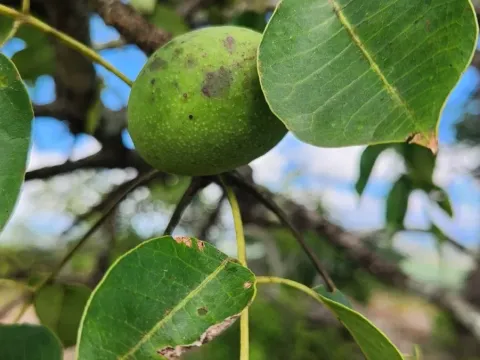
Sclerocarya
Sclerocarya
Sclerocarya, commonly known as the Marula tree, is typically propagated from seeds. However, for commercial orchards, vegetative propagation methods like budding or grafting are preferred to ensure genetic uniformity and faster fruiting.
What the section contains


Sclerocarya
Seed germination requires scarification due to the extremely hard endocarp of the stone. This preparation is essential to break dormancy and achieve a higher success rate in nursery conditions.
Young seedlings are raised in containers for the first 12 months. This period allows the root system to develop sufficiently before transplanting the saplings into their permanent locations in the orchard.
When planting, it is crucial to consider the tree's dioecious nature. An orchard must contain both male and female trees in a proper ratio, usually one male for every ten females, to facilitate effective cross-pollination.
Spacing is a vital aspect of establishment, as mature trees develop wide, spreading canopies. A distance of at least 10 to 12 meters between trees is recommended to prevent future overcrowding and allow for machinery access.
Native to the savannahs of sub-Saharan Africa, Sclerocarya belongs to the Anacardiaceae family. It is highly drought-tolerant and thrives in climates characterized by distinct wet and dry seasons.
The crop prefers well-drained, sandy, or light loam soils. While it can survive on poorer quality soils, optimum growth is achieved in deep, fertile substrates with good drainage to prevent root rot.
Full sun exposure is an absolute requirement for Sclerocarya. It cannot tolerate shade, which results in stunted growth, reduced flowering, and significantly lower yields of fruit.
The tree is extremely sensitive to frost and extreme cold. It performs best in tropical or subtropical environments where temperatures remain consistently above freezing throughout the entire year.
While the tree is self-sustaining in its native environment, plantation management involves keeping the soil around the base clean to prevent moisture competition and potential soil-borne pests.
Marula fruit is the primary economic output of the tree. A single mature tree can produce a substantial harvest of succulent, vitamin C-rich fruits, which are highly valued for their nutritional properties.
Fruiting typically begins when trees reach 5 to 7 years of age if grafted, while seed-grown trees may take over a decade to reach their full productive potential in an orchard setting.
The fruit's versatility is a key driver for cultivation. The flesh is processed into juices, jellies, and fermented beverages, while the nut contains a kernel used for producing high-quality cosmetic oil.
Peak yields occur when the tree reaches maturity, typically between 20 and 30 years. With proper orchard management, trees can remain productive for several decades, providing a long-term return on investment.
Yield stability is heavily dependent on weather conditions during the flowering season; excessive rain or drought at this stage can interfere with the pollination process and fruit set.
Young Sclerocarya trees are vulnerable to competition from invasive weeds, which can impede their early development. Regular mulching and weeding around the base are necessary for optimal establishment.
Pest pressure primarily comes from fruit flies, which lay eggs in the developing fruit. This can cause significant losses if not managed through integrated pest control programs in commercial orchards.
Fungal diseases can occur under conditions of high humidity or poor canopy ventilation. Thinning of the branches is recommended to ensure adequate airflow and sunlight penetration into the interior of the tree.
In wild or semi-cultivated settings, large herbivores such as elephants or giraffes can cause significant damage to the bark and branches, necessitating protective barriers for young plantations.
Phytosanitary practices, such as the rapid removal and destruction of fallen, damaged fruit, are essential to minimize the risk of pest populations building up within the orchard environment.
The harvest is primarily conducted by gathering the fruits that have fallen to the ground. This indicates that the fruit has reached its peak maturity, maximum sugar content, and optimal flavor profile.
Timing is critical, as fallen fruits are highly perishable in hot weather. Daily collection is standard practice to prevent fermentation and spoilage, ensuring the highest quality raw material for processing.
Post-harvest management involves separating the edible pulp from the hard stones. The stones are then washed, dried, and stored until they can be mechanically processed to extract the valuable kernels.
Logistical speed is essential. Because the fruit is highly succulent and prone to rapid degradation, processing facilities must be located close to the orchards to maintain the integrity of the juice and nectar.
Proper drying of the stones is essential for long-term storage and subsequent oil extraction. The kernels contain stable oils that are highly sought after by the international cosmetic and food industries.