
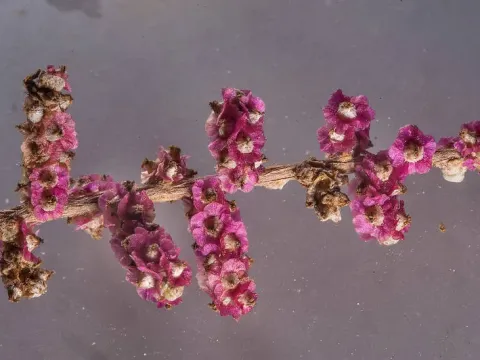
Salsola cyclophylla
Salsola cyclophylla
Salsola cyclophylla is a member of the Amaranthaceae family, known for its ability to thrive in extreme desert environments. It is a perennial subshrub with a life cycle adapted to harsh climatic conditions.
What the section contains
Salsola cyclophylla
The sowing process typically involves autumn or early spring seeding. Allowing the seeds to overwinter in the soil provides a natural stratification effect that promotes better germination rates when temperatures rise.
Seeds should be planted at a shallow depth, as they are small and possess limited energy reserves. Light mechanical covering or roller pressing is recommended to ensure optimal seed-to-soil contact.
Seedlings grow relatively slowly in the first few months. During this establishment phase, it is essential to minimize competition from fast-growing weeds that might choke out the young Salsola plants.
The selection of planting sites should focus on areas with minimal disturbance, as the species is sensitive to mechanical damage during its early development stages.
As a true halophyte, Salsola cyclophylla flourishes in soils with high salinity. It utilizes salts to regulate its water intake, making it an ideal candidate for land reclamation in saline-affected regions.
High solar radiation is mandatory for this species. It is strictly intolerant to shade, and any reduction in light exposure results in stunted growth and weakened plant structure.
The soil profile should be light and well-drained. Sandy or loamy substrates are preferred, as these allow for the necessary aeration and prevent waterlogging, which the plant cannot survive.
Water requirements are extremely low once the plant is established. Its specialized leaf structure and metabolic processes are evolved to minimize transpirational losses in extreme heat.
Fertilization is rarely required in its native habitat. However, a small application of nitrogen in early growth stages can help increase total biomass production in managed agricultural settings.
The primary economic use of Salsola cyclophylla is as a critical forage source for camels, sheep, and goats in desert regions where other green forage is unavailable during the winter.
The biomass of the plant is rich in minerals, which provides essential nutrition for livestock surviving in nutrient-poor environments. Its availability during the dormant season makes it a highly valued resource.
Beyond forage, the plant is a champion of soil conservation. It effectively stabilizes drifting sands and helps prevent soil erosion caused by wind, making it vital for desertified landscapes.
Yield varies significantly based on annual precipitation. In years with adequate spring rainfall, the plant exhibits robust vegetative growth, whereas drought years lead to lower biomass production.
Future potential includes exploring its use in technical applications, although its primary current value remains strictly within the scope of pastoral livestock management and environmental restoration.
Salsola cyclophylla exhibits remarkable resilience against typical fungal pathogens that plague other crops. Its internal salt balance acts as a natural deterrent to many common agricultural diseases.
The most significant threat to a stand of Salsola comes from insect pests, particularly locusts, which can devour large patches of vegetation during outbreaks.
Nematodes may become an issue if the crop is cultivated in monoculture for extended periods. Implementing a rotating land-use policy is the most effective preventative measure.
Overgrazing is a major threat to population sustainability. Excessive pressure from livestock damages the stems and depletes root resources, leaving the plant vulnerable to death during extreme drought.
Integrated pest management strategies focusing on monitoring and sustainable grazing rotation are key to protecting and enhancing the longevity of these stands.
Seed harvesting should occur when the fruits are fully mature and dry to the touch. Timing is crucial, as the seeds shatter and disperse easily once the plant reaches senescence.
When used as a pasture, direct harvesting is replaced by the management of animal grazing cycles. Ensuring that grazing does not occur during the seed-setting phase is vital for natural regeneration.
For hay production, mowing should be done when vegetative growth is at its peak. Rapid drying under full sunlight is necessary to maintain the quality and prevent the tissue from becoming too succulent for storage.
Storage of harvested seeds must take place in dry, ventilated conditions. Humidity can quickly ruin the viability of the seed stock, leading to poor germination rates in the next season.
Proper management of the harvesting or grazing schedule ensures that the population remains productive for many years, supporting both the livestock and the soil ecosystem.