
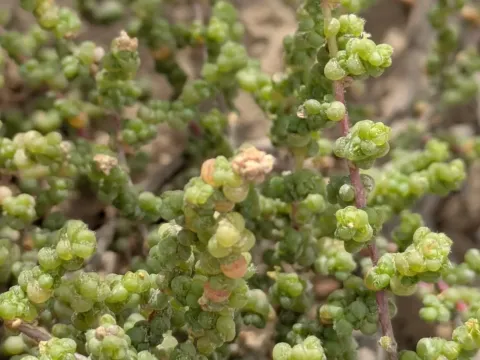
Salsola baryosma
Salsola baryosma
Salsola baryosma is a perennial subshrub belonging to the Amaranthaceae family. It is a highly specialized halophytic plant, evolutionarily adapted to thrive in harsh desert and semi-desert environments across North Africa and Western Asia.
What the section contains
Salsola baryosma
The plant exhibits remarkable physiological resilience, enabling it to survive in soils with high salt content and under extreme temperatures. Its biological structure is optimized for water retention in tissues, allowing it to remain green during intense drought.
Geographically, it is distributed in arid zones where traditional agriculture is impossible. Its presence in these regions is vital for maintaining the ecosystem balance and preventing the advancement of desertification.
Agronomic requirements focus on sunlight and drainage. Salsola baryosma requires high levels of UV radiation and cannot tolerate waterlogged soils, which lead to root distress. It performs well in sandy or rocky substrates common in arid habitats.
The economic value of this culture is primary in livestock feeding, particularly for camels and sheep, which browse on its foliage. It is considered an important forage reserve in arid pastoral systems where herbaceous fodder is scarce.
Due to its high salinity tolerance and specialized chemical composition, the plant is relatively resistant to standard agricultural pests, though desert locusts pose a seasonal risk to its biomass.
The main threats to the health of Salsola baryosma populations are opportunistic fungal infections that can occur if stagnant water accumulates around the roots due to poor soil structure.
Small mammals and desert rodents often feed on the stems, which can be detrimental to young plantations. Protection measures often involve managing the density of these animal populations.
Human impact, specifically overgrazing, remains the most significant threat. Continuous browsing prevents the plant from setting seeds and replenishing the soil seed bank.
Sustainable management requires rotational grazing cycles to ensure that the plants have adequate time to recover their structural integrity and reproductive potential after harvesting.