
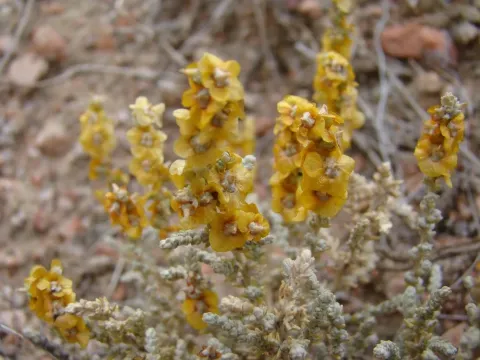
Salsola gemmascens
Salsola gemmascens
Sowing of Salsola gemmascens is recommended during the autumn period, which allows the seeds to undergo natural stratification in the soil. Optimal timing falls within the period just before the onset of winter temperatures, ensuring that sprouts emerge early in spring under favorable conditions.
What the section contains
Salsola gemmascens
When using winter sowing, seeds should be planted at a depth of no more than 1 to 2 centimeters, which is critical for the small seeds of this plant. Adhering to proper sowing depth prevents the topsoil from drying out and ensures adequate contact between the seed and the soil environment.
Seeding rates depend on soil conditions and the specific goals of phytomelioration, typically ranging from 2 to 4 kilograms per hectare. When cultivating for forage purposes, it is important to ensure uniform seed distribution across the plot to form a consistent stand of vegetation.
In natural conditions, Salsola gemmascens propagates by seed, but artificial germination efficiency is improved by pre-treatment with growth stimulants. This approach allows for uniform seedling emergence even in environments with limited moisture availability and harsh desert soils.
After sowing on light sandy soils, rolling the surface is recommended to compact the soil around the seeds. This simple agrotechnical measure prevents wind erosion of the seeds and preserves the necessary moisture in the germination zone to support early plant development.
Salsola gemmascens is a semi-shrub belonging to the Amaranthaceae family, which is a typical representative of the flora in arid zones of Central Asia. The plant is adapted to extremely harsh conditions, including drastic temperature fluctuations and severe atmospheric drought.
The primary requirement for soil is high tolerance to salinity, as the crop is classified as a halophyte. It thrives in solonchaks, solonetz, and other degraded soils where the majority of standard agricultural crops are unable to survive or produce sufficient biomass.
For normal development, the plant requires intense solar radiation, as it cannot tolerate shading. In low-light conditions, Salsola reduces its productivity and becomes susceptible to secondary phytopathogens, which significantly slows down its annual growth rate.
The crop possesses a unique ability to accumulate minerals, making it indispensable for restoring the fertility of saline lands. Its deep root system allows the plant to extract moisture from lower soil horizons, ensuring survival and persistence throughout prolonged dry seasons.
Optimal soil pH levels for this crop vary across a wide range, but alkaline environments are clearly preferred. It successfully tolerates the high alkalinity characteristic of takyrs and desert soils, while maintaining its nutritional value and robust growth characteristics.
The green mass yield of Salsola gemmascens is directly dependent on the moisture availability during a specific growing season and the degree of soil salinity. In favorable years, the plant is capable of forming a significant volume of vegetative mass suitable for small ruminant grazing.
When utilized as a forage crop, the average dry matter yield ranges from 3 to 7 quintals per hectare. These figures can fluctuate significantly depending on plant density per unit area and the age of the stand at the time of harvesting or grazing.
The peak of biomass accumulation occurs in the middle of the summer period, when the plant most effectively utilizes available moisture resources. It is essential to prevent overgrazing to ensure annual yield renewal and to avoid the degradation of the soil surface.
To improve productivity in pasture areas, periodic land resting is practiced, which allows the Salsola to form seeds and carry out natural reseeding. This ensures stable plot productivity over many years without the need for additional costly inputs or frequent reseeding.
The nutritional indicators of the forage remain high even in the late autumn phase, when many other pasture grasses lose their essential qualities. This makes Salsola a valuable reserve for the autumn and winter maintenance of sheep and camels in arid regions.
Salsola gemmascens exhibits high resistance to diseases characteristic of conventional crops, thanks to its specialization in extreme habitats. Most threats are associated with ecological imbalances rather than direct infectious pressure or agricultural pathogens.
In waterlogged soil conditions, root rot caused by soil-borne fungi may develop, although this occurs extremely rarely. The primary defense is the avoidance of areas with stagnant water, which is critical for maintaining the health of this halophyte's root system.
Among pests, insects that damage the reproductive organs of the plant during the flowering period pose the greatest threat. Larvae of certain weevils and moths can reduce the seed productivity of the population if appropriate monitoring is not implemented.
Excessive livestock grazing at early stages of vegetation is the main anthropogenic factor that suppresses the development of Salsola. Mechanical damage to shoots by animals can lead to weakening of the plant and its displacement by opportunistic weed species.
For pest control on an industrial scale, it is advisable to use biological protection methods, given the fragility of desert ecosystems. The use of chemical pesticides in such zones is highly undesirable due to the risk of disrupting the delicate natural soil microflora.