
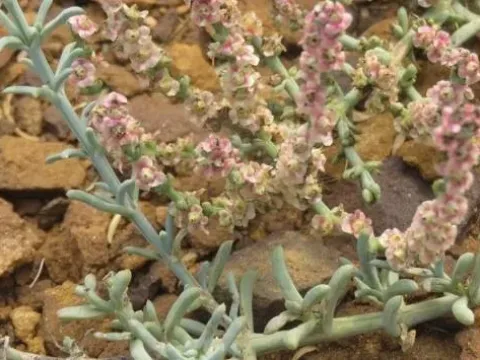
Salsola glomerata
Salsola glomerata
Salsola glomerata is a perennial subshrub belonging to the Amaranthaceae family. As a specialized halophyte, it is perfectly adapted to environments characterized by high soil salinity and severe aridity, which would typically inhibit traditional crops.
What the section contains
Salsola glomerata
The native range of the species encompasses the semi-desert and desert regions of Central Asia and the Caucasus. It demonstrates remarkable physiological resilience, maintaining viability during extreme heatwaves and prolonged periods of significant water scarcity.
Botanically, the plant is distinguished by a deep-reaching root system designed to access water reservoirs deep underground. Its branches are highly ramified, and its leaves possess a succulent texture, which functions as an effective mechanism to store moisture and reduce transpiration rates.
Agronomic requirements are focused on well-drained, saline, or alkaline soils where competitive pressure from other flora is low. The species thrives under intense solar radiation, which facilitates its metabolic processes in harsh desert climates.
In terms of economic utility, Salsola glomerata is an essential component of pasture management for camels, sheep, and goats. It provides high mineral and nutritional value during seasons when conventional grasses are unavailable, making it a critical strategic resource for livestock farming.
The primary pathological threats to this crop involve fungal pathogens that emerge during periods of unexpected high moisture levels. Excess humidity in the soil profile often triggers root rot, which can negatively impact the density and vigor of the plant population.
In terms of insect pests, the plant is susceptible to various sucking insects, particularly spider mites, which exploit the succulent tissues of the leaves during extended heat cycles. These infestations can severely reduce the overall biomass production of the pasture.
Larvae of moths belonging to the Noctuidae family pose a significant threat to the plant's reproductive structures. By damaging the flowers and seeds, these pests can interfere with natural regeneration cycles if not monitored properly.
Effective management against threats relies on the systematic rotation of grazing areas to prevent soil compaction and physical damage to the plant structures. Maintaining a balanced ecosystem helps in managing pest populations through natural predation.
Due to the plant's designation as a livestock feed source, chemical pesticide applications are restricted or entirely avoided. Agronomists emphasize biological and cultural control methods to ensure that the fodder remains safe for animal consumption.