
Mueller's Saltbush
Atriplex muelleri
Mueller's Saltbush (Atriplex muelleri) is a herbaceous plant belonging to the Amaranthaceae family. As a specialized halophyte, it is particularly noted for its ability to thrive in saline and alkaline soil conditions that are typically unsuitable for traditional cereal or pulse crops.
What the section contains
Mueller's Saltbush
The plant originates from arid regions of Australia, where it has evolved to withstand intense drought and high-temperature fluctuations. Its evolutionary strategy involves efficient water retention and osmotic adjustment to ensure survival in harsh environmental conditions.
Cultivation requirements involve selecting open, sunny sites with good soil drainage. While the plant is drought-resistant, it shows optimal biomass production when it has access to a minimal amount of moisture during the early establishment phase. Its salt-tolerance makes it a key species for land reclamation.
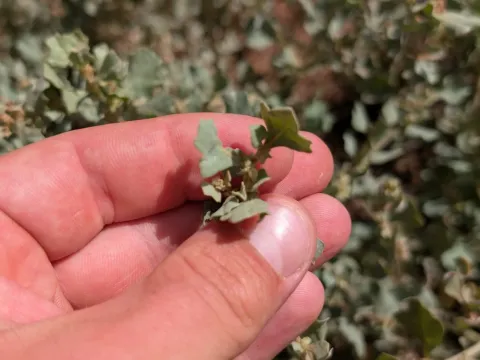
Morphologically, Atriplex muelleri is defined by its bushy growth habit, featuring alternate leaves covered in fine hairs or scales that protect the plant from excessive dehydration. Its flowers are small and inconspicuous, facilitating wind-pollination across arid landscapes.
The primary economic use of Mueller's Saltbush is as high-quality forage for livestock. It provides essential minerals and protein when traditional pasture grasses dry out or fail to grow, making it a critical component of sustainable pastoral systems in arid regions.
The main threats to Mueller's Saltbush include root rot diseases triggered by waterlogging, which often occur when cultivation occurs on poorly drained soils or during unseasonal excessive rainfall events.
Pest pressure is primarily driven by aphids and various leaf-feeding beetles, which can significantly damage the foliage and reduce the nutritional quality of the forage provided to grazing animals.
Soil-borne nematodes can pose a latent threat to the plant's health, particularly in degraded soils. These pests impair root function, making the plant more susceptible to drought stress despite its natural adaptations.
Weed management during the germination and seedling establishment phase is crucial. Once the saltbush establishes its root system, it competes effectively for nutrients and space in its native habitat.
In terms of agricultural management, maintaining a balanced grazing rotation is essential to prevent overgrazing, which can weaken the plant and increase its susceptibility to secondary infections by opportunist pathogens.