
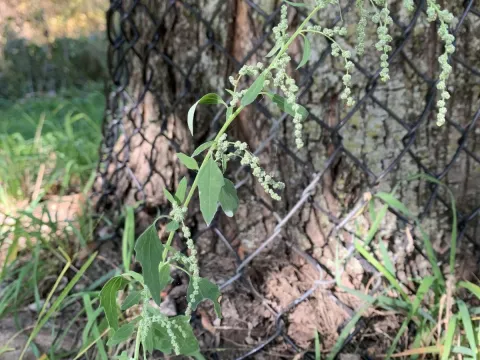
Missouri goosefoot
Chenopodium missouriense
Sowing Missouri goosefoot requires a well-prepared seedbed to ensure high germination rates. The soil should be finely tilled to promote proper seed-to-soil contact.
What the section contains
Missouri goosefoot
The optimal sowing time occurs when soil temperatures consistently reach 10-12 degrees Celsius. This ensures rapid seedling emergence and robust early-stage development.
Seeds should be planted at a shallow depth, typically ranging from 1 to 2 centimeters. Excessively deep sowing can inhibit germination and reduce overall stand uniformity.
Seeding rates should be adjusted based on soil fertility levels and the intended use of the crop, whether for biomass or grain production.
After planting, lightly compacting the soil surface is recommended to retain moisture and ensure that the seeds are firmly embedded in the ground.
Missouri goosefoot, a member of the Amaranthaceae family, is highly adaptable to various environmental conditions, making it a resilient agricultural crop.
The plant thrives in full sun and requires well-drained, fertile soils to reach its maximum yield potential. It shows moderate tolerance to periodic dry spells.
Neutral to slightly alkaline soil pH levels are preferred for optimal nutrient uptake. Amendments like lime may be necessary for acidic soils to improve plant health.
Adequate space between rows is essential to allow for sufficient air circulation and to minimize the risk of pathogen accumulation during the growing season.
Strategic fertilization, particularly with nitrogen and phosphorus, can significantly boost the vegetative growth and overall quality of the harvested produce.
Fungal diseases, such as downy mildew, are the primary threats to Missouri goosefoot, particularly in regions with high humidity and poor field drainage.
Insect pests, including aphids and various leaf-miners, can cause significant damage to the foliage, which negatively impacts the plant's photosynthetic capacity.
Effective management includes implementing a diverse crop rotation strategy to break the life cycles of common soil-borne pathogens and insect populations.
- Regular field scouting is necessary to identify pest and disease outbreaks before they reach economic damage thresholds.
- Applying biological controls can be an effective alternative to traditional chemical treatments.
- Maintaining healthy plant vigor through balanced nutrition reduces susceptibility to opportunistic infections.
Weed control during the early stages is crucial because Missouri goosefoot seedlings are vulnerable to competition from more aggressive, fast-growing weeds.
The harvesting process for Missouri goosefoot is timed according to the target end product, aiming to maximize seed viability or biomass nutritional value.
Farmers typically monitor the moisture content of the seeds closely to determine the precise window for harvesting, ensuring minimal seed loss in the field.
Harvesting often involves mechanical swathing followed by threshing once the plant material has reached the desired level of dryness to facilitate processing.
Post-harvest cleaning is essential to remove chaff, debris, and foreign material, ensuring that the final output meets quality standards for storage or sale.
Properly dried and stored produce should be kept in climate-controlled conditions to prevent the growth of storage molds and the deterioration of seed oils.