
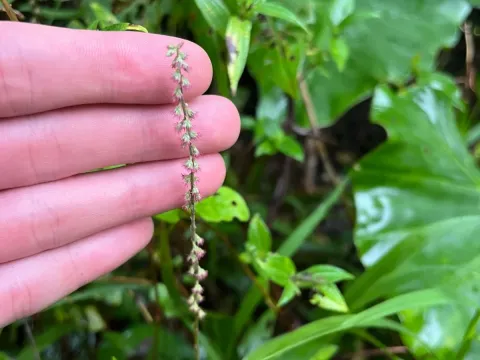
Cyathula prostrata
Cyathula prostrata
Cyathula prostrata is a member of the Amaranthaceae family, widely distributed throughout tropical regions. This herbaceous perennial is known for its creeping habit and is increasingly studied for its agricultural potential.
What the section contains
Cyathula prostrata
Sowing should take place at the onset of the rainy season to ensure natural irrigation. Seeds are best planted at a depth of 1 cm, requiring a stable soil temperature between 22°C and 25°C for optimal germination.
The planting site should be prepared by clearing weeds to ensure the young seedlings do not face competition during the sensitive early development stage of their growth cycle.
Spacing is essential for Cyathula prostrata; keeping plants 30–40 cm apart helps maintain good air circulation and promotes vigorous growth of the foliage, which is the primary harvested part.
For large-scale cultivation, precision seeding methods are used to achieve uniform density, which significantly facilitates later manual or mechanical harvesting procedures.
This crop thrives in well-drained, loamy soils rich in organic matter. A neutral to slightly acidic pH range is considered ideal for nutrient uptake and healthy root system development.
Cyathula prostrata prefers partial shade to full sun. While it is adaptable to different light intensities, consistent exposure to extreme heat should be mitigated through proper soil mulching.
Water requirements are high, particularly during the vegetative growth phase. However, care must be taken to prevent waterlogging, which often leads to root rot in tropical environments.
The plant demonstrates good resilience against local climate fluctuations, provided that the soil moisture levels are maintained through a systematic irrigation schedule.
Standard fertilization practices involve the application of nitrogen-based fertilizers during the early stages, followed by organic compost to ensure sustained growth and biomass accumulation.
The crop is occasionally susceptible to fungal diseases such as leaf spot, especially in areas with poor drainage and excessive humidity during the transition from the rainy season to the dry season.
Common pests include aphids and various beetle species that target the succulent leaves. Integrated pest management strategies are recommended to keep damage levels within economic thresholds.
Weed management remains the most critical task during the first weeks after germination, as the plant is not aggressive enough to compete with fast-growing tropical invasive species.
Root-knot nematodes can also pose a threat if the crop is planted repeatedly in the same location; therefore, implementing a crop rotation system is strongly advised for sustainable yield.
Periodic monitoring of the plantation is necessary to identify early signs of nutrient deficiency or pest infestations, allowing for timely application of preventive biological or mechanical measures.
Harvesting for medicinal purposes typically begins during the peak flowering stage. At this point, the plant contains the highest concentration of bioactive secondary metabolites.
Manual harvesting is common for smaller plots, involving the careful cutting of stems just above the basal node, which promotes regeneration if the plant is being grown as a perennial.
Post-harvest handling is critical; the harvested biomass must be dried immediately in a ventilated, shaded area to prevent mold growth and maintain the potency of the medicinal extracts.
Roots can be harvested at the end of the growth cycle. They are washed thoroughly to remove all soil particles, dried in low-temperature ovens, and packed in breathable materials for storage.
Quality control during the harvest process involves separating diseased parts from healthy plant material, ensuring that the final output meets the necessary pharmacological standards.