
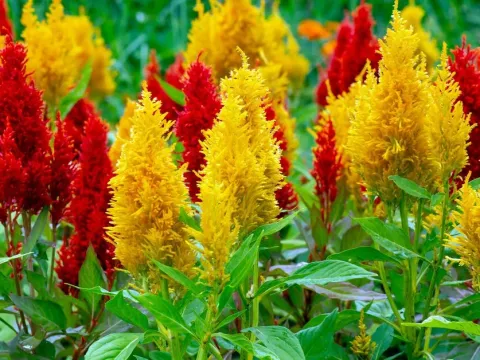
Celosia hybrids
Celosia hybrids
Celosia hybrids belong to the Amaranthaceae family and are heat-loving crops. In temperate climates, seeds are usually sown indoors in March or early April, as the seeds require a long development period before being transplanted into the soil.
What the section contains
Celosia hybrids
For successful germination, the soil temperature must be maintained between 22 and 25 degrees Celsius. It is crucial to provide sufficient lighting immediately after emergence to prevent the seedlings from becoming leggy.
Seedlings are pricked out at the two-leaf stage into individual pots to avoid damaging the sensitive root system. Transplanting into open ground is carried out only after the danger of frost has passed and the soil has warmed up thoroughly.
Direct sowing into the soil often results in plants failing to complete their flowering cycle before autumn frosts. Therefore, the seedling method remains the only reliable way to produce high-quality commercial plants.
Planting density varies by variety: 15–20 cm for dwarf forms and up to 30–40 cm for tall varieties. Planting density significantly impacts flower spike development and overall crop aesthetics.
The crop is highly demanding in terms of warmth and sunlight, so choose open, wind-protected areas for cultivation. In shady conditions, Celosia stops developing, and the inflorescences lose their vibrant color and shape.
The soil should be light, nutrient-rich, and have a neutral or slightly acidic pH. Heavy clay substrates are unsuitable as they retain excess moisture, leading to root rot and plant death.
Irrigation should be moderate; the crop tolerates short-term drought better than water stagnation in the root zone. Overwatering is the primary risk factor for the development of various root rots.
During active vegetative growth, plants respond well to mineral fertilizers with low nitrogen content. Excess nitrogen promotes rapid leaf growth at the expense of flower spike formation.
Good field drainage is a critical requirement for professional cultivation. The plant responds well to regular soil loosening, which ensures oxygen access to the roots and prevents surface crust formation.
The primary enemy of the crop in both greenhouses and open fields is "damping-off" (blackleg), which affects young seedlings under conditions of high humidity. Prevention involves soil disinfection and strict irrigation control.
Among pests, aphids pose the greatest danger, colonizing young shoots and inflorescences by sucking sap and deforming the plant. Spider mites are also common pests during hot and dry weather.
Fungal diseases, such as Fusarium wilt, are common and can cause entire plants to wither. Infected specimens must be immediately removed and destroyed to prevent the spread of the pathogen.
Root-knot nematodes can cause significant damage to the root system, leading to stunted growth and yellowing leaves. Since control is difficult, crop rotation is an essential preventive measure.
To prevent pest outbreaks, maintain sufficient spacing between plants to improve airflow. Preventive treatments with biological preparations during active growth stages are also highly effective.