
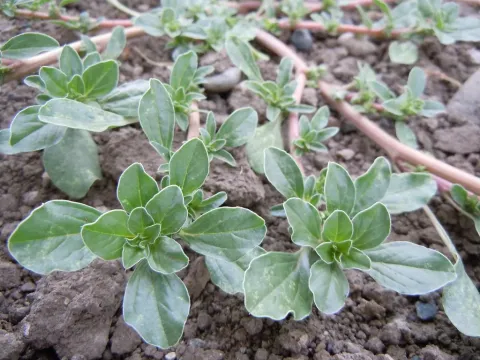
California amaranth
Amaranthus californicus
California amaranth (Amaranthus californicus) is an annual herbaceous plant belonging to the Amaranthaceae family. Native to the western parts of North America, this species is well-adapted to specific regional microclimates ranging from moist meadows to dry, sandy habitats.
What the section contains
California amaranth
The plant thrives in full sun exposure, which is critical for its photosynthetic efficiency and seed maturation. It is highly valued for its adaptability to various soil types, including sandy, gravelly, and even slightly saline substrates that are often unsuitable for conventional crops.
Botanically, this species is characterized by its prostrate or ascending growth habit, distinguishing it from the tall, erect grain amaranth varieties. The leaves are generally lanceolate, and the flowers are clustered in small axillary spikes, which are typical for the genus Amaranthus.
Regarding moisture requirements, California amaranth is hardy and can tolerate periodic water stress once the root system is established. It is frequently found in areas with seasonal flooding, showcasing a broad physiological tolerance that allows it to survive in fluctuating environmental conditions.
In terms of agricultural use, this species is primarily utilized as a forage component in range management. Its ability to grow in challenging environments makes it a potential subject for research in soil reclamation and sustainable biomass production in arid or semi-arid climates.