
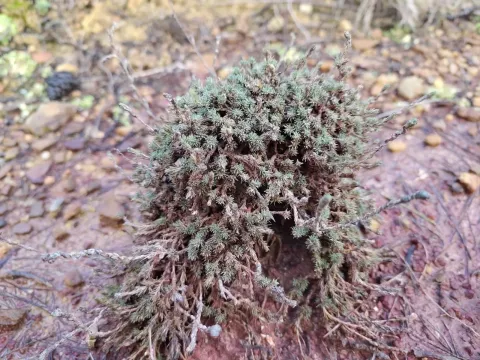
Camphorosma
Camphorosma L.
Camphorosma (Camphorosma L.) is a genus of plants belonging to the family Amaranthaceae. These are typically subshrubs or herbs recognized by their intense camphor-like odor, which is the result of secreted essential oils.
What the section contains
Camphorosma
The genus is widely distributed across the arid and semi-arid regions of Eurasia. It is an evolutionary adaptation to environments characterized by high soil salinity, where it functions as a primary producer in extreme saline ecosystems.
The plant demonstrates remarkable environmental tolerance. It thrives under intense solar radiation and is highly resistant to drought, making it a robust candidate for vegetation in areas where most crops would fail due to water stress.
Soil requirements are highly specialized as the plant prefers saline substrates, including solonchaks and solonetzes. It is capable of absorbing and compartmentalizing minerals, which serves as a strategy for survival in high-salt soil solutions.
Agricultural management is generally low-input. Because of its nature as a wild-growing halophyte, it requires minimal intervention, primarily focusing on soil protection and ensuring initial establishment without competition from invasive species.
The primary agricultural use of Camphorosma is as forage for livestock, particularly sheep, goats, and camels in saline desert regions. It provides essential nutrients during periods when other forage sources are limited.
Beyond its value as fodder, the plant is extensively utilized in ecological engineering. It is a key species for phytoremediation and the stabilization of saline soils, preventing erosion in fragile desert ecosystems.
Harvesting for fodder is typically managed through rotational grazing systems. This approach prevents overgrazing and allows the plant to set seeds, ensuring the long-term sustainability of the pasture lands in arid zones.
There is minor historical interest in the plant for medicinal use due to its essential oil content, though this is not currently a primary commercial driver. Research continues into the biochemical properties of the various species within the genus.
Future agricultural prospects involve the systematic restoration of degraded salt-affected lands using Camphorosma. Its ability to tolerate severe environmental conditions makes it a vital tool for sustainable land management in changing climates.