
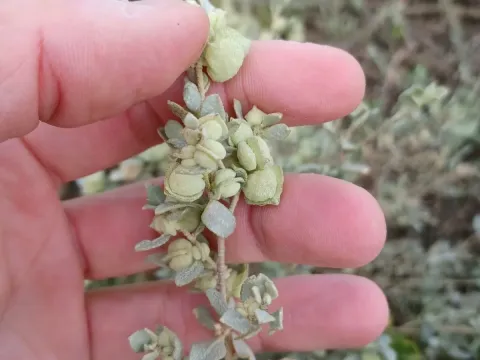
Bladder saltbush
Atriplex vesicaria
Bladder saltbush (Atriplex vesicaria) is a hardy perennial subshrub belonging to the Amaranthaceae family. It is widely recognized as a dominant species in the arid and semi-arid landscapes of Australia, providing vital ground cover.
What the section contains
Bladder saltbush
The plant is biologically optimized for survival in low-rainfall zones. It utilizes specialized mechanisms to tolerate high salinity in the soil and tissue, a trait that makes it an essential fodder source in challenging ecological environments.
Climatic requirements are focused on high temperature and sunlight exposure. It thrives in regions where evaporation rates are high, demonstrating significant resilience to seasonal water scarcity through deep taproots.
Soil preferences include alkaline, saline, and sodic soils where competing flora often fails to establish. It is frequently employed in revegetation projects for degraded lands due to its soil-stabilizing properties.
Management of this culture involves controlled grazing schedules to ensure plant longevity. It provides a steady supply of protein-rich forage for sheep and cattle during periods when traditional grasses are unavailable.
The primary threat to Bladder saltbush populations is overgrazing, which significantly reduces the plant's vigor and seed production capabilities. Sustained grazing pressure can lead to complete loss of stands if not rotated properly.
Pest threats include various insect larvae that feed on the foliage and the succulent parts of the plant. During high-density outbreaks, these pests can cause defoliation, which hampers the photosynthesis of the shrub.
Diseases are relatively uncommon in its native arid habitat but may occur under managed irrigation conditions. Root rot is a significant risk if the soil remains waterlogged for extended periods during cooler months.
Environmental degradation, including soil compaction from machinery, can inhibit the growth of new shoots. Proper field maintenance requires careful vehicle management to preserve the integrity of the root system.
Weed encroachment is a secondary threat, as invasive species may outcompete young seedlings for limited nutrient resources. Integrated weed management is recommended during the establishment phase of the plantation.