
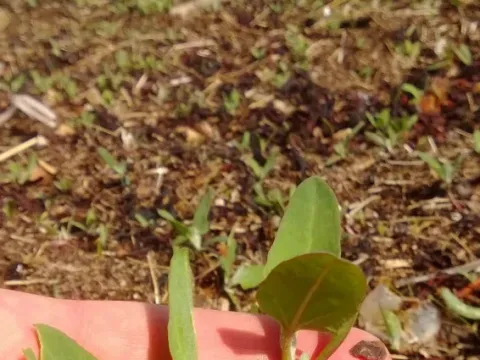
Bracteosa saltbush
Atriplex bracteosa
Bracteosa saltbush (Atriplex bracteosa) belongs to the Amaranthaceae family and is recognized as a hardy crop suited for challenging environments. It is primarily propagated by seeds sown directly into the soil during the early growing season.
What the section contains
Bracteosa saltbush
The ideal sowing depth is approximately 1–2 centimeters, ensuring adequate soil contact for germination. Temperatures between 15°C and 25°C promote the fastest and most uniform seedling emergence.
Row planting is standard practice, typically maintaining a distance of 40–50 centimeters between rows to allow for initial weed control. This spacing also encourages robust development of the plant's canopy.
Success in crop establishment depends heavily on moisture at the time of sowing. Once the root system is well-developed, the plant shows increased tolerance to dry spells during the early development phase.
Farmers often utilize specialized machinery for seeding to ensure consistent depth and density, which are critical factors for achieving uniform stands across large areas.
The defining characteristic of Atriplex bracteosa is its exceptional halophytic nature, allowing it to thrive in saline soils that are often detrimental to traditional agricultural crops.
This crop requires full sunlight to optimize its photosynthetic efficiency. Sufficient light is essential for the accumulation of biomass and the maintenance of high protein levels in its foliage.
While tolerant of drought, the plant responds favorably to occasional irrigation, especially in soils with high salt content, as water helps to leach excess salts away from the immediate root zone.
Soil structure should ideally be loose to allow root penetration; however, the species is remarkably adaptable and can establish itself in heavy or compacted soils if drainage is adequate.
It prefers alkaline to neutral soil pH levels. This adaptability makes it an excellent candidate for the restoration of degraded or naturally saline landscapes.
In terms of agricultural output, Bracteosa saltbush is harvested mainly for forage. Under favorable management, it produces substantial volumes of green biomass suitable for livestock feed.
The nutritional profile of the harvested material includes a good balance of protein and essential minerals. It is particularly valued as a supplement in the diets of ruminants grazing in arid environments.
Biomass productivity peaks before the plant enters the reproductive stage. Harvesting should be carefully timed to occur before stems become overly lignified, ensuring the highest quality fodder.
Processed biomass can be stored as silage or hay, providing a reliable source of nutrition when fresh pasture is unavailable during seasonal dry periods.
Economic yield is directly linked to soil nitrogen availability and the ability of the farmer to manage plant growth through timely harvesting and maintenance.
Atriplex bracteosa is generally resistant to many common agricultural diseases. However, excessive moisture during the vegetative stage may lead to root rot or fungal infections in stagnant air conditions.
Leaf-feeding insects represent the primary pest risk. Regular field scouting is necessary to identify potential infestations before they affect biomass quantity and quality.
Weed competition is only a concern during the first month after planting. Once the canopy closes, the saltbush is highly effective at outcompeting unwanted herbaceous species.
Management of soil structure is key to prevention, as compacted soils often lead to poor plant vigor and increased susceptibility to opportunistic pathogens.
Integrated pest management strategies are recommended, focusing on maintaining plant vigor to ensure natural resistance rather than relying on heavy chemical interventions.
Mechanical harvesting using forage harvesters is the most efficient way to collect biomass. The cutting height should be adjusted to encourage regrowth while ensuring clean collection.
Seed production requires harvesting at full maturity. At this stage, the bracts turn a brownish hue, indicating the seeds are ready for collection before natural dispersal occurs.
Post-harvest processing is essential for long-term seed storage. Seeds must be cleaned and dried to a low moisture content to prevent viability loss during storage.
Harvesting efficiency is improved by selecting equipment capable of handling both leafy material and woody stems, ensuring uniform processing of the crop.
Consistent harvest management not only provides high-quality feed but also helps in controlling the plant's life cycle to ensure longevity of the field stand.