
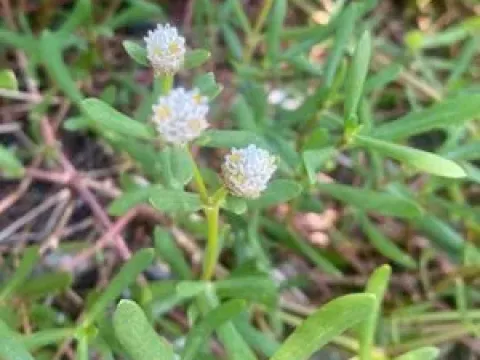
Blutaparon
Blutaparon
Blutaparon is a genus of herbaceous plants within the Amaranthaceae family. These plants are widely recognized for their ability to thrive in harsh maritime environments, serving as a primary component of coastal vegetation and dune stability systems.
What the section contains

Blutaparon
Originating from tropical and subtropical regions of the Americas and various oceanic islands, these plants have evolved to colonize sandy beaches and dunes. Their habitat is characterized by extreme conditions, including high salinity, strong winds, and high levels of ultraviolet radiation.
Botanically, the genus features succulent stems and leaves, which are structural adaptations for moisture retention. The plants typically have a prostrate or creeping growth habit, allowing them to spread across the sand and anchor themselves firmly using adventitious roots.
The cultivation of Blutaparon requires full sun exposure and extremely well-drained, sandy soil conditions. They are highly intolerant of waterlogged soils, as their native habitat provides natural drainage that must be replicated in any controlled cultivation setting.
In terms of usage, these plants are primarily valued for environmental restoration and coastal landscaping. Their ability to bind shifting sands makes them essential for anti-erosion programs in coastal areas, as well as for xeriscaping in arid climates where water conservation is necessary.