
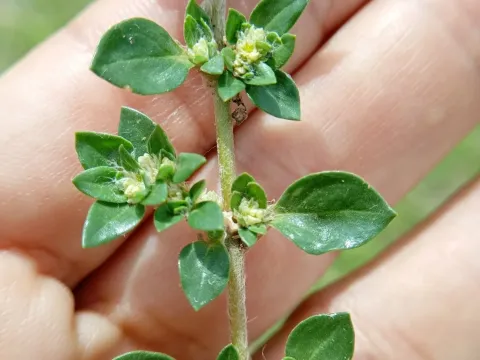
Brayulinea
Brayulinea
Brayulinea is a genus of herbaceous plants belonging to the family Amaranthaceae. It is primarily native to the tropical and subtropical regions of the Americas, where it thrives in various open environments.
What the section contains
Brayulinea
In an agricultural context, Brayulinea is typically categorized as a weed that colonizes disturbed sites, roadsides, and cultivated fields. Its presence is often associated with regions lacking dense vegetation cover.
The plant demonstrates significant environmental adaptability, preferring well-drained sandy soils and high light intensities. Its biology is geared towards rapid growth cycles that allow it to capitalize on transient moisture availability.
Morphologically, the plant is characterized by a low, spreading growth habit and efficient nutrient uptake systems that make it a formidable competitor against slow-establishing crops.
Successful management of this plant requires a thorough understanding of its growth phases and the implementation of cultural practices that favor the dominant crop species over opportunistic weed growth.
The primary concern regarding Brayulinea is its ability to reduce crop yields by competing for vital soil nutrients, water, and space, particularly during the early vegetative development stages of the main crop.
As a member of the Amaranthaceae family, it can act as an alternative host for several viral pathogens and insect pests that frequently affect high-value horticultural and field crops.
Pest pressure is often linked to the plant's succulent foliage, which attracts various sucking insects, potentially leading to secondary infestations within the primary field environment.
Integrated weed management (IWM) programs are essential to keep Brayulinea populations under control, utilizing a combination of physical, chemical, and preventative measures.
Continuous monitoring of the field edges and inter-row spaces is necessary to prevent the plant from flowering and contributing to the persistent soil seed bank, which makes eradication difficult.