
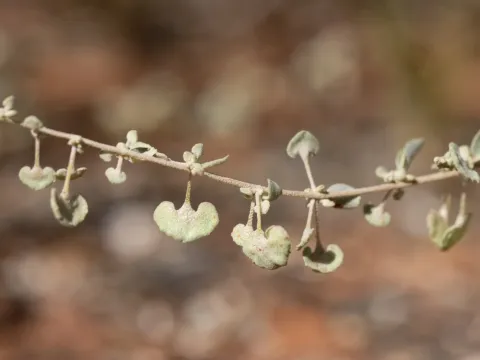
Bitter saltbush
Atriplex stipitata
Bitter saltbush is a typical flora member of arid zones, so its sowing time is tied to the onset of the rainy season or the period with the most favorable soil moisture conditions.
What the section contains
Bitter saltbush
The optimal time for sowing is considered to be the autumn period when air temperatures drop, promoting more uniform seed germination in natural desert environments.
When cultivated in specialized farms, seeds are sown at a depth of no more than 1-2 centimeters, as small planting material requires careful handling during placement.
To ensure germination, it is necessary to consider the biological dormancy of the seeds, which in nature is often broken after passing through the digestive tract of animals.
Sowing density is calculated based on the intended use: row methods are applied for pasture establishment, taking into account the future expansion of the shrub.
The crop belongs to the Amaranthaceae family and is a prominent halophyte capable of growing successfully on saline soils where most agricultural crops would perish.
The plant possesses high resistance to extremely high temperatures and long periods of drought, making it an essential component of ecosystems in arid regions.
It prefers open areas with intense sunlight, as any shading negatively impacts the rate of vegetative development and the overall density of the bush.
Soil composition is not a critical factor for Bitter saltbush, although the most effective growth is observed on light sandy or loamy substrates with adequate drainage.
Adaptation to salt pans is achieved through the accumulation of salts in the plant's cells, which regulates osmotic pressure and allows the crop to survive in harsh conditions.
The yield of Atriplex stipitata depends directly on the level of annual precipitation and the degree of anthropogenic pressure on the pasture land where it grows.
In favorable years, the biomass of a single plant can reach significant volumes, providing high nutritional value for livestock.
Its primary value lies in the green forage mass, which retains its palatability even during the summer periods when other herbaceous communities dry out.
Productivity levels in terms of dry weight can range from several hundred kilograms to a ton per hectare under proper grazing management and without overstocking.
Using the crop as a component of perennial forage lands allows livestock farms to stabilize productivity during dry seasons.
Common threats include specific insect phytophages that feed on halophyte tissues, although their impact on the population is usually localized.
Fungal diseases are rare due to the dry climate in which the plant grows; however, excessive moisture during the growing season can cause root rot.
The main factor contributing to a decline in population is overgrazing by livestock, which prevents the plant from regenerating its vegetative organs and storing nutrients.
Competition with aggressive invasive plant species can suppress the growth of Bitter saltbush during the early stages of seedling development.
Small rodents can cause damage by gnawing on the root system and stems in search of moisture during the most arid months of the year.