
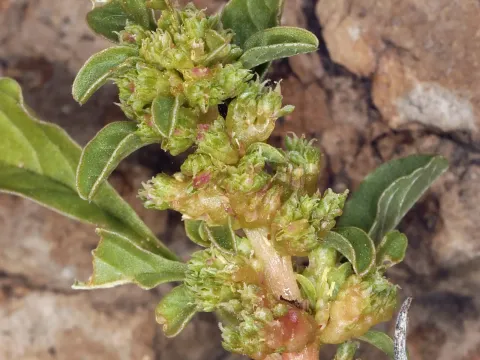
Amaranthus crassipes
Amaranthus crassipes
Amaranthus crassipes is a thermophilic crop that requires warm soil temperatures of at least 15–18 degrees Celsius to initiate successful germination.
What the section contains
Amaranthus crassipes
The optimal sowing window typically falls in late spring once the threat of frost has completely passed in the growing region.
Seeds should be sown at a shallow depth of approximately 1 to 2 centimeters to ensure adequate moisture contact and promote uniform emergence.
Row planting with spacing between 45 and 60 centimeters is recommended to allow for efficient mechanical weeding and nutrient access.
Proper seedbed preparation is vital, as a fine tilth encourages better seed-to-soil contact and faster overall development of young seedlings.
This species belongs to the Amaranthaceae family and is highly adaptable to various soil types, including those with relatively low fertility levels.
The crop exhibits significant drought tolerance, allowing it to maintain metabolic activity even under water-limited conditions during the growing season.
Full sun exposure is a primary requirement for this species, as it thrives in high light intensity areas with minimal overhead shading.
While tolerant of various pH levels, the plant performs best in neutral to slightly acidic soils that provide essential micro and macronutrients.
Adequate soil aeration is critical, as the roots require oxygenated environments to support the plant's rapid vegetative growth rate.
The productivity of Amaranthus crassipes is closely linked to the availability of nutrients and the implementation of effective weed control measures.
When managed properly as a forage crop, it provides a high yield of biomass that can be harvested multiple times during a single season.
Strategic nitrogen applications during the vegetative phase can significantly boost the overall protein content and total harvest weight.
Yield stability is generally high, as the plant possesses natural defense mechanisms that allow it to recover from minor environmental stressors.
Farmers can achieve consistent results by monitoring soil moisture levels and ensuring that weeds do not compete for resources during early growth.
The crop is generally resilient, but excessive humidity and poor drainage can lead to the development of fungal root rot pathogens.
Leaf-eating pests, such as various types of beetles or caterpillars, can pose a risk by reducing the plant's photosynthetic capacity.
Effective management includes maintaining proper field hygiene and ensuring that the soil structure supports good water infiltration.
In case of pest outbreaks, integrated pest management practices should be employed to protect the crop without compromising environmental quality.
Crop rotation with non-host species is highly recommended to break the life cycle of soil-borne pathogens that might affect the plant.
Harvesting for forage purposes is best performed during the vegetative stage before the plant enters its full flowering and seed-setting phase.
Timing the harvest is crucial to maintain a balance between high biomass volume and the nutritional quality of the plant tissues.
Mechanical harvesting techniques involve using forage equipment set at an appropriate cutting height to allow for rapid regrowth of the stubble.
When harvesting for seed production, one must wait until the inflorescences are mature and the seeds reach their full physiological development.
Proper post-harvest processing, including drying and storage, is essential to prevent moisture buildup and potential fungal spoilage of the yield.