
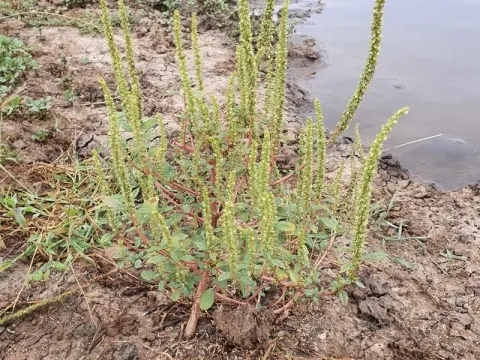
Amaranthus praetermissus
Amaranthus praetermissus
Amaranthus praetermissus is an annual herbaceous plant belonging to the Amaranthaceae family, known for its adaptability and significant agricultural potential.
What the section contains
Amaranthus praetermissus
The optimal sowing time begins once soil temperatures reach a stable 12–15 degrees Celsius, ensuring rapid germination and uniform crop emergence.
Given the extremely small size of the seeds, precise sowing depth of 1–2 centimeters is vital to prevent seedling exhaustion before reaching the surface.
Standard agronomic practices include packing the soil after seeding to improve capillary moisture supply, which is critical for success in dry climatic conditions.
Row spacing should be calibrated based on the intended purpose—either biomass production or grain harvesting—to maximize yield per unit area.
The plant thrives best in light, well-aerated soils with a neutral or slightly alkaline pH, showing resilience across various soil types.
Amaranthus praetermissus is highly valued for its drought tolerance, as its deep root system allows it to extract moisture effectively during dry spells.
Full solar exposure is a fundamental requirement for the healthy growth of this species; shading can drastically reduce biomass and seed quality.
Moderate temperatures ranging from 20 to 28 degrees Celsius are ideal for vegetative development, with frost presenting a significant risk during the early and late stages.
While responsive to nitrogen fertilizers, the crop should be managed carefully to ensure balanced nutrient uptake, preventing excessive vegetative growth at the expense of grain.
With proper management, the biomass yield of this amaranth species is substantial, providing high-quality fodder for livestock production.
Grain yields are influenced by genetic potential and environmental factors, with modern intensive farming techniques enabling competitive production levels.
The crop serves as an excellent green manure, contributing organic matter to the soil and improving its structural integrity for subsequent plantings.
Harvesting efficiency is a key factor in overall yield, with modern machinery allowing for large-scale operations in suitable geographic regions.
Strategic use of crop rotation practices helps maintain high yields over several seasons, preventing nutrient depletion and pathogen accumulation.
Seedlings are susceptible to early-stage soil pests, which require preventative monitoring and appropriate treatment to ensure a full plant population.
High humidity and poor field drainage can trigger fungal diseases, such as root rot, that may compromise the root system's integrity.
Common leaf-feeding insects might impact plant health during peak summer months, requiring scouts to monitor and manage infestations promptly.
Implementing integrated pest management strategies, including the use of resistant varieties, significantly reduces the dependency on chemical control methods.
Regular field scouting and timely intervention are essential to protect the crop from pests that could otherwise reduce both biomass and seed quality.
For fodder purposes, harvesting should take place at the initiation of the flowering stage, ensuring peak nutritional value and digestibility.
Seed harvesting is conducted upon reaching full maturity, indicated by grain hardness and the ease of threshing from the dried inflorescences.
Proper combine settings, specifically drum speed and concave clearance, are necessary to prevent mechanical damage to the fine seeds during harvest.
Post-harvest conditioning includes cleaning and drying to reach a moisture content of 12–14 percent, ensuring safe long-term storage.
Storage facilities should maintain low humidity to prevent quality degradation, allowing for the effective use of the seeds for various agricultural applications.