
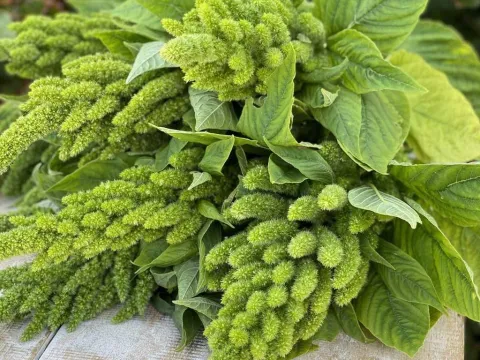
Amaranthus haughtii
Amaranthus haughtii
Amaranthus haughtii is a warm-season crop, necessitating that sowing occurs only when soil temperatures consistently reach 12-14°C at seeding depth.
What the section contains
Amaranthus haughtii
In temperate zones, the optimal sowing window is late May, ensuring the plant avoids any potential frost damage that could hinder initial development.
The small size of the seeds requires shallow placement in the soil, ideally between 1.5 and 2 centimeters, to facilitate rapid germination and access to surface moisture.
Standard agronomic practices recommend a wide-row planting scheme with 45–70 centimeters between rows to allow for effective mechanized weeding and care.
Depending on the cultivation method, the seeding rate ranges from 0.5 to 1.5 kilograms per hectare, providing the density needed for optimal biomass production.
As a long-day plant, Amaranthus haughtii thrives in well-lit areas, requiring full sun exposure throughout the day to achieve maximum growth potential.
The species prefers fertile, well-drained loam or sandy-loam soils with a neutral pH, demonstrating poor performance in waterlogged or heavy clay environments.
Although the plant possesses significant drought tolerance due to its taproot system, supplemental irrigation during critical growth stages will boost yield significantly.
Initial weed management is vital during the first month, as the crop exhibits slow early growth and can easily be suppressed by faster-growing competitive weeds.
Nitrogen fertilization applied during the vegetative stage helps optimize biomass density and the nutritional profile of the plant for livestock feed purposes.
Under intensive agricultural management, green biomass yields for Amaranthus haughtii can reach 40–60 tonnes per hectare, reflecting its high productivity.
Seed production yields are equally promising, typically ranging from 1.5 to 3 tonnes per hectare, making it a viable alternative crop for grain farmers.
Optimal nutrient content in the foliage is achieved when harvesting occurs during the transition from the budding phase to early flowering.
Productivity metrics are highly dependent on plant spacing and the elimination of competing vegetation, which highlights the importance of field maintenance.
Incorporating crop residues back into the soil post-harvest serves as an organic amendment, enhancing long-term soil structure and fertility for subsequent seasons.
Early-stage infestations by weevils can cause significant damage to young seedlings, often necessitating preventative seed treatments or early insect monitoring.
Root rot remains a primary concern in fields with poor drainage or where the crop is grown in soils that have not undergone proper rotation.
Powdery mildew may manifest under conditions of high humidity and heat, impacting the leaf tissue and reducing the overall photosynthetic capacity of the plants.
Integrated pest management strategies are encouraged, focusing on crop rotation cycles and maintaining clean, well-drained field conditions to mitigate risks.
- Regular inspection of fields for signs of foliage damage.
- Implementation of 3-year crop rotation to break pathogen cycles.
- Avoidance of over-irrigation to maintain appropriate soil oxygen levels.
For green fodder, harvest should be executed using mechanical forage harvesters, targeting the biomass before the plant enters full reproductive maturity.
Seed harvesting should be timed carefully when the panicles show clear signs of maturity, typically indicated by the darkening of seeds and decreased plant moisture.
Efficient grain collection requires prompt harvesting to prevent seed shedding, which can cause significant loss if delayed past the window of physiological maturity.
Post-harvest conditioning includes immediate cleaning and drying of the seeds to 12-14% moisture content to ensure safe storage and maintain grain viability.
Given its nutritional density, the harvested product is highly valued in the livestock and poultry sectors for its excellent amino acid and protein profile.