
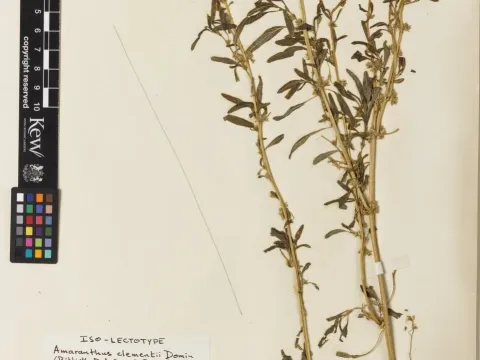
Amaranthus clementii
Amaranthus clementii
Amaranthus clementii is a heat-loving crop belonging to the Amaranthaceae family, requiring consistent soil temperatures of at least 12–15°C for germination.
What the section contains
Amaranthus clementii
Sowing should ideally occur in mid-to-late May, ensuring the ground has sufficiently warmed to prevent delayed growth and seedling diseases.
Due to the small size of the seeds, they must be sown at a shallow depth of 1–2 cm, followed by firming the soil to ensure good seed-to-soil contact.
Row spacing is generally maintained between 45 cm and 70 cm to facilitate mechanical weeding and ensure optimal exposure to sunlight for all plants.
Early-stage weed control is vital, as the crop exhibits slow initial growth and can be easily outcompeted by aggressive weeds in the first month.
This crop thrives in high-light conditions and is highly sensitive to shading, which significantly decreases total biomass production and overall plant vigor.
Amaranthus clementii is remarkably drought-tolerant, making it an excellent candidate for cultivation in arid or semi-arid regions with limited rainfall.
The plant adapts well to various soil types, preferring well-drained sandy or loam soils, though it remains productive across a broad range of fertility levels.
Optimal pH levels for cultivation typically range between 6.0 and 7.5; the plant struggles in highly acidic or waterlogged soil environments.
Balanced fertilization is key, specifically monitoring nitrogen levels to prevent excessive vegetative growth that can delay maturation and lower grain quality.
When grown for forage, the green biomass yield of Amaranthus clementii can reach impressive levels of 40–60 metric tons per hectare under irrigation.
Grain yields for this species generally range from 1.5 to 2.5 metric tons per hectare, depending on local climate conditions and soil management practices.
The nutritional profile of the harvested material is highest during the flowering phase, which is the recommended time for cutting if forage is the goal.
Crop management practices, such as inter-row cultivation, are essential to maintain moisture levels and minimize competition for nutrients during peak growth.
Proper harvest scheduling ensures the maximization of nutrient accumulation in the seeds, which is critical for food and feed applications of the crop.
Root rot and powdery mildew are the most common pathogens affecting this species, particularly when high humidity occurs during the early vegetative phases.
Pests such as aphids and various weevil species may damage young shoots, potentially affecting plant development if not addressed early in the season.
A structured crop rotation plan is essential to reduce the buildup of soil-borne pathogens and pests associated with the Amaranthaceae family.
Regular field scouting allows farmers to identify early signs of infestation or disease, enabling targeted interventions and reducing chemical dependency.
Maintaining clean field borders and managing wild Amaranthus relatives can significantly lower the risk of local insect and pathogen migration to the main crop.
Forage harvesting is conducted at the peak of the flowering stage, ensuring the plant is nutrient-dense and not overly fibrous for livestock feed.
Grain harvest should take place once the panicles have turned color and seed moisture content has dropped to approximately 15–18% to prevent mold.
Efficient grain drying post-harvest is mandatory; the seeds are prone to heat-induced damage and spoilage if stored at higher moisture levels.
Using specialized combines with adjusted settings for small-seeded crops helps minimize significant losses during the threshing and cleaning process.
Post-harvest crop residues can be successfully integrated back into the soil, providing valuable organic matter to improve long-term soil structure and health.